
Antistatic PCB Cleaning Brushes
- Roller Brushes
- Board brush
- Hand brush
- Nylon
- Carbon fiber
- Stainless steel wire
- Filament material
- Conductive nylon / carbon-fibre blend / stainless-steel wire / phosphor-bronze wire
- Surface resistance
- 10³ – 10⁶ Ω
- Filament Diameter
- 0.05 – 0.30 mm
- Configuration
- Hand brush / strip brush / roller brush / disc brush
- Handle / brush body
- Conductive PP / aluminum handle / stainless steel handle
- Grounding
- Handle grounding terminal / shaft-end grounding ring
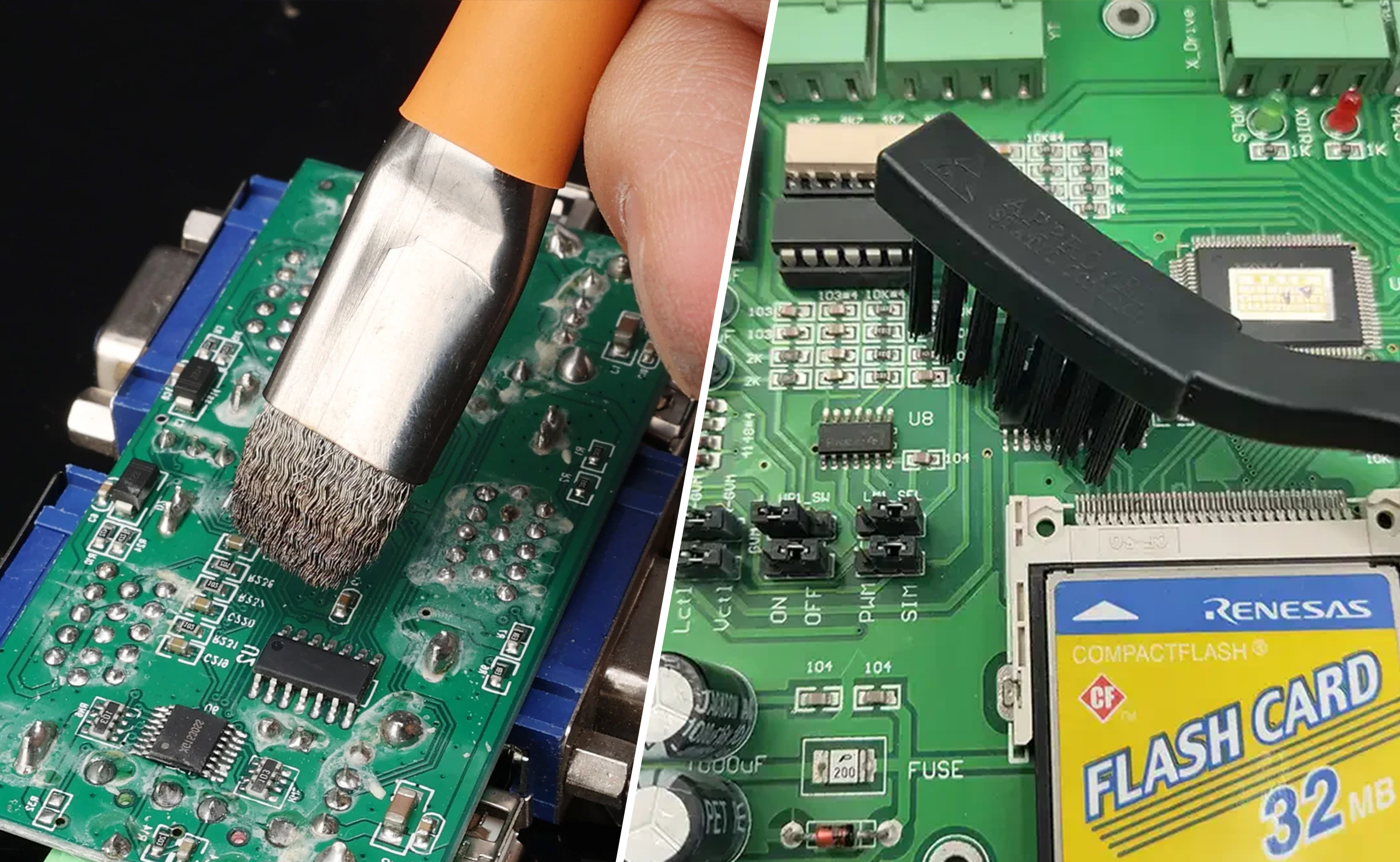
PCB antistatic cleaning brushes are hand brushes, strip brushes, roller brushes, and disc brushes that use conductive or antistatic filaments to dissipate static charge from the board surface and fixtures.Common Supply Ranges: Filament diameter 0.05–0.30 mm; conductive models have a surface resistance of 10³–10⁶ Ω (graded by formulation; actual grades are subject to sample measurements); nylon types withstand temperatures ≤80 ℃. The handle and brush body are available in conductive PP / aluminum handle / stainless steel handle, with a handle grounding terminal or shaft-end grounding ring. Suitable for dust removal in electronic assembly and on PCB surfaces. Conductive brushes must be reliably grounded; otherwise, charge has nowhere to dissipate. The above ranges represent the supply range rather than material limits. Actual performance varies with formulation, brush position and operating conditions and must be verified using samples on the equipment.

Three forms Three types: roller brush / board brush / handheld toothbrush
PCB cleaning roller brush
Primary option for inline dust removal and deburring. Outer diameter φ50–φ200 mm and face length ≤1500 mm. Nylon 6/66 or conductive wire may be mixed in. Installed in a horizontal conveyor section; performance is better with a dust hood.
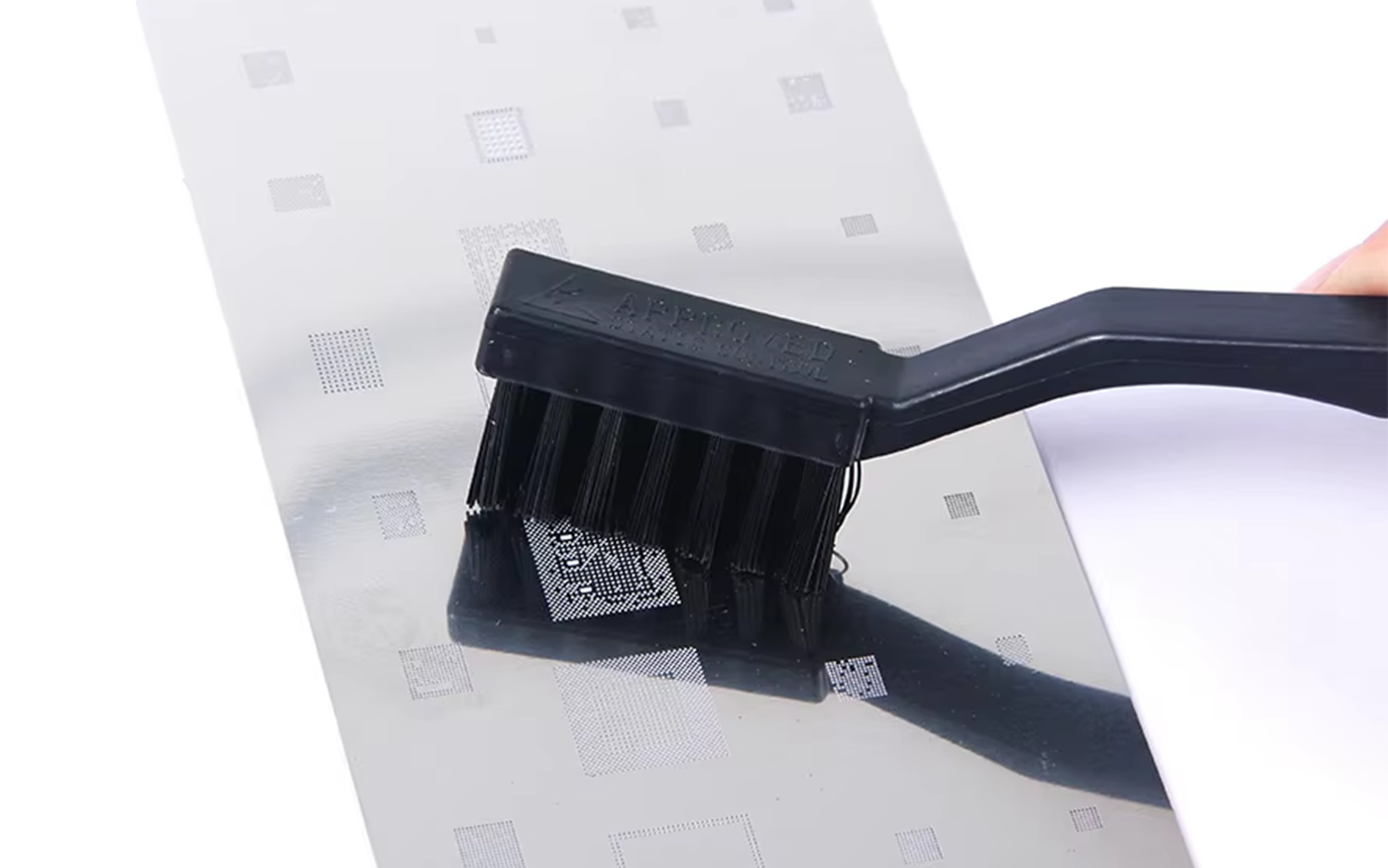
PCB antistatic board brushes
For flat-surface wiping. Brush face width 20–120 mm, with conductive wire and nylon mixed in; resistance can be controlled at 10³–10⁶ Ω. The handle includes a grounding tab to prevent the brush body itself from becoming a charge accumulation point.
Handheld antistatic toothbrushes
Second cleaning stage for board edges, gold fingers and fixture dead spots. Brush head 8–40 mm, made of soft nylon or conductive nylon; the handle is antistatic-treated. Low unit cost and individually replaceable.
Specification Specification Parameter Ranges
| Parameter | Common ranges / options | Description |
|---|---|---|
| Filament material | Conductive nylon / carbon-fibre blend / stainless-steel wire / phosphor-bronze wire | Select by cleaning target and ESD requirements |
| Surface resistance | 10³ – 10⁶ Ω | Select by common ANSI/ESD classifications; custom requirements are supported |
| Filament Diameter | 0.05 – 0.30 mm | Finer metal wire to avoid scratches |
| Configuration | Hand brush / strip brush / roller brush / disc brush | Select by workstation and degree of automation |
| Handle / brush body | Conductive PP / aluminum handle / stainless steel handle | The brush body must form a conductive path with the filaments |
| Grounding | Handle grounding terminal / shaft-end grounding ring | Roller brushes require grounding rings and periodic testing |
| Temperature resistance | ≤ 80 ℃ (nylon types) | Change materials for high-temperature sections |
| Cleaning target | PCB surfaces / boards / equipment chambers / fixtures | Filament diameter and hardness vary by cleaning target |
| Packaging | Antistatic bags | Prevent charge accumulation during transportation |
| Testing | Measured surface resistance can be provided | Available as needed |
The table lists common ranges, not extreme values. Actual specifications shall be confirmed according to the brush-position drawing and operating conditions; where specific limits apply, mutually agreed technical documents shall prevail.
Configurations Structural configuration
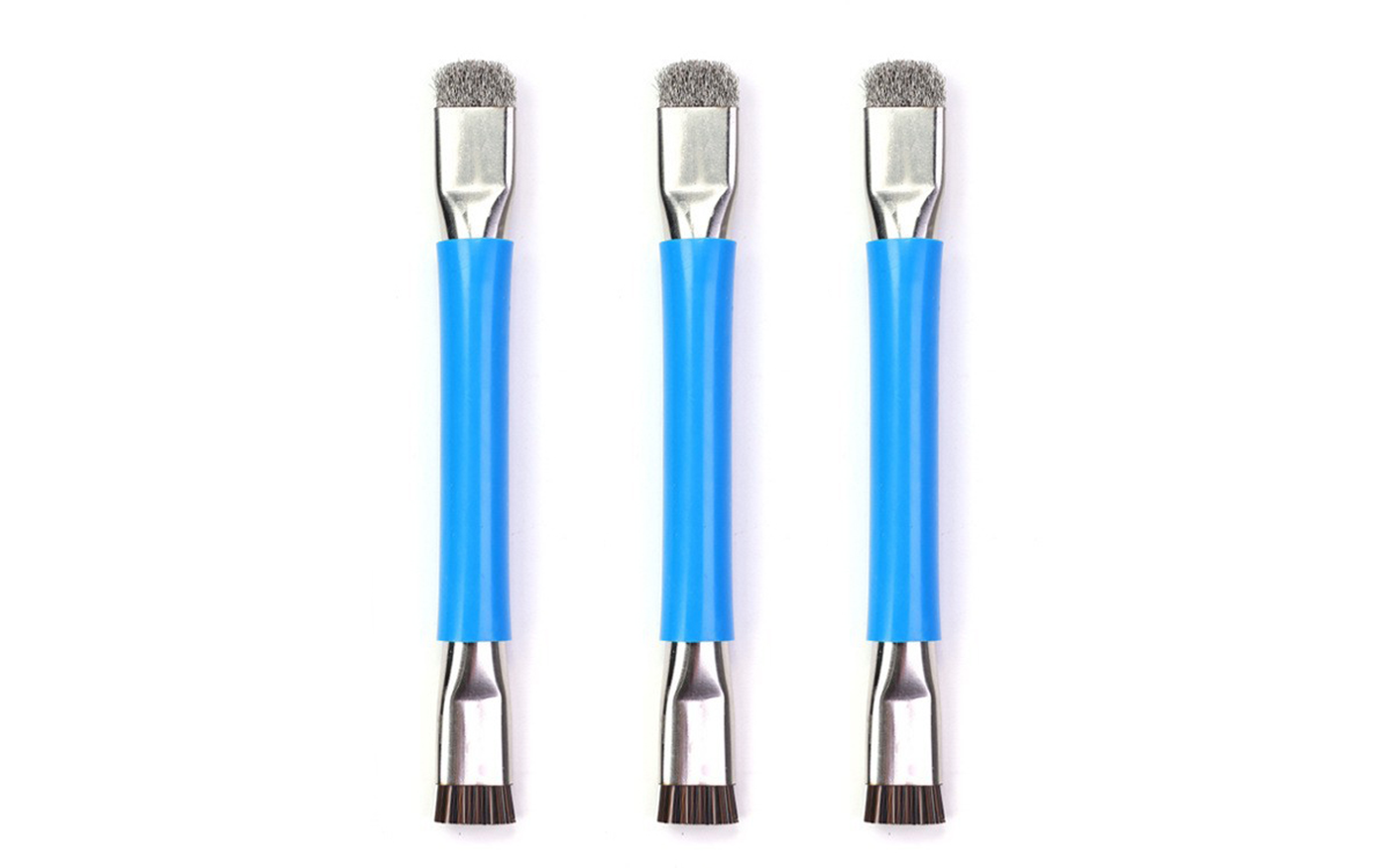
Conductive nylon hand brush
For cleaning commonly used workstations; soft and non-scratching, suitable for board surfaces and gold surfaces.
Carbon fiber blend roller brush
For automated production lines; stable resistance and wear resistance.
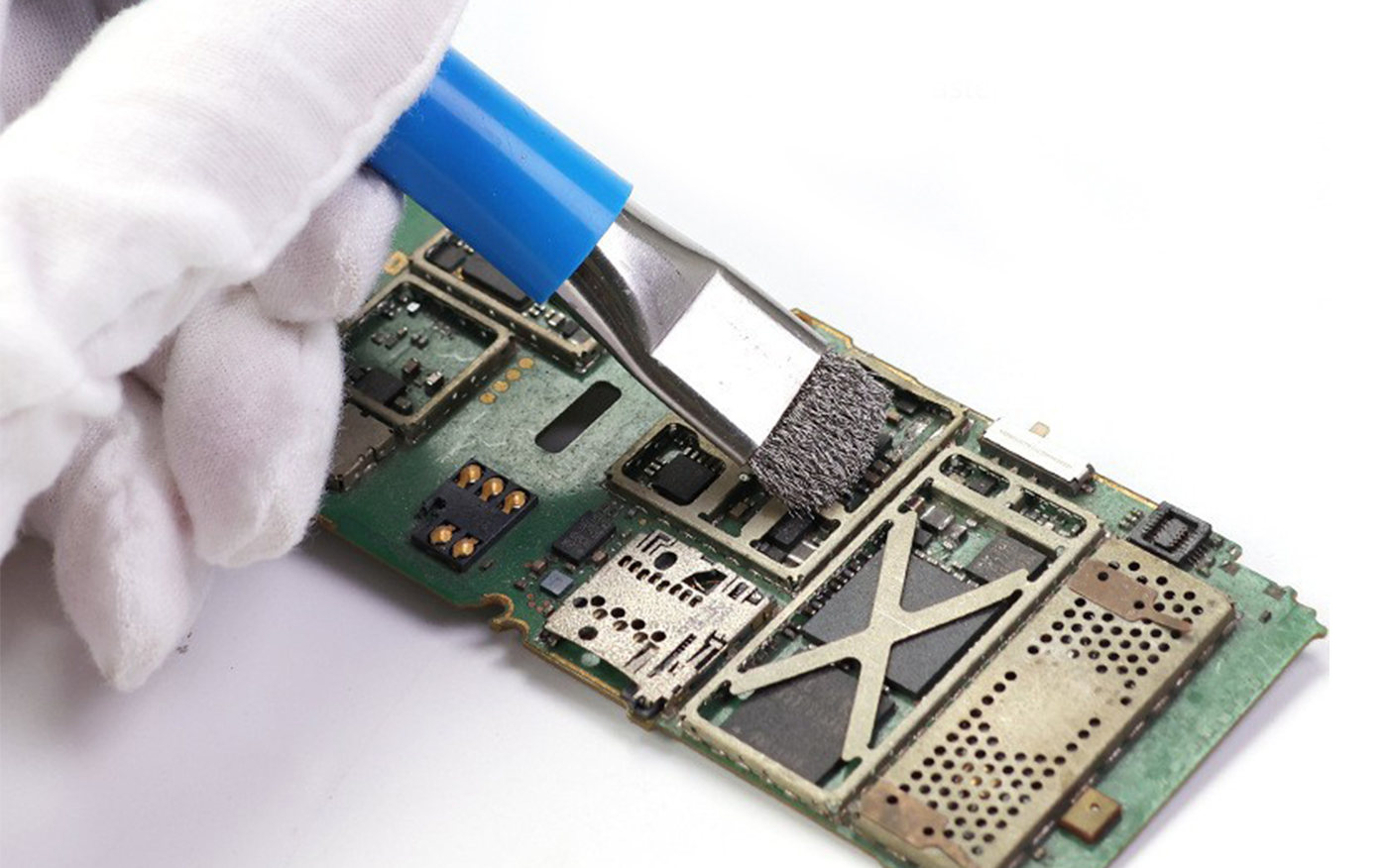
Stainless steel wire strip brush
For intensive cleaning of equipment chambers and fixtures; does not contact product surfaces.
Grounded cleaning roller
Shaft-end grounding ring for continuous dust-removal stations.
FAQ Product selection and communication
How should conductive filament and antistatic filament be selected?
Can stainless steel wire brushes be used directly on products?
Can a surface resistance report be provided?
How should hand brushes and roller brushes be selected?
Customer requirements
Leave your contact details and requirements so we can get in touch.