
Polishing Disc Brushes
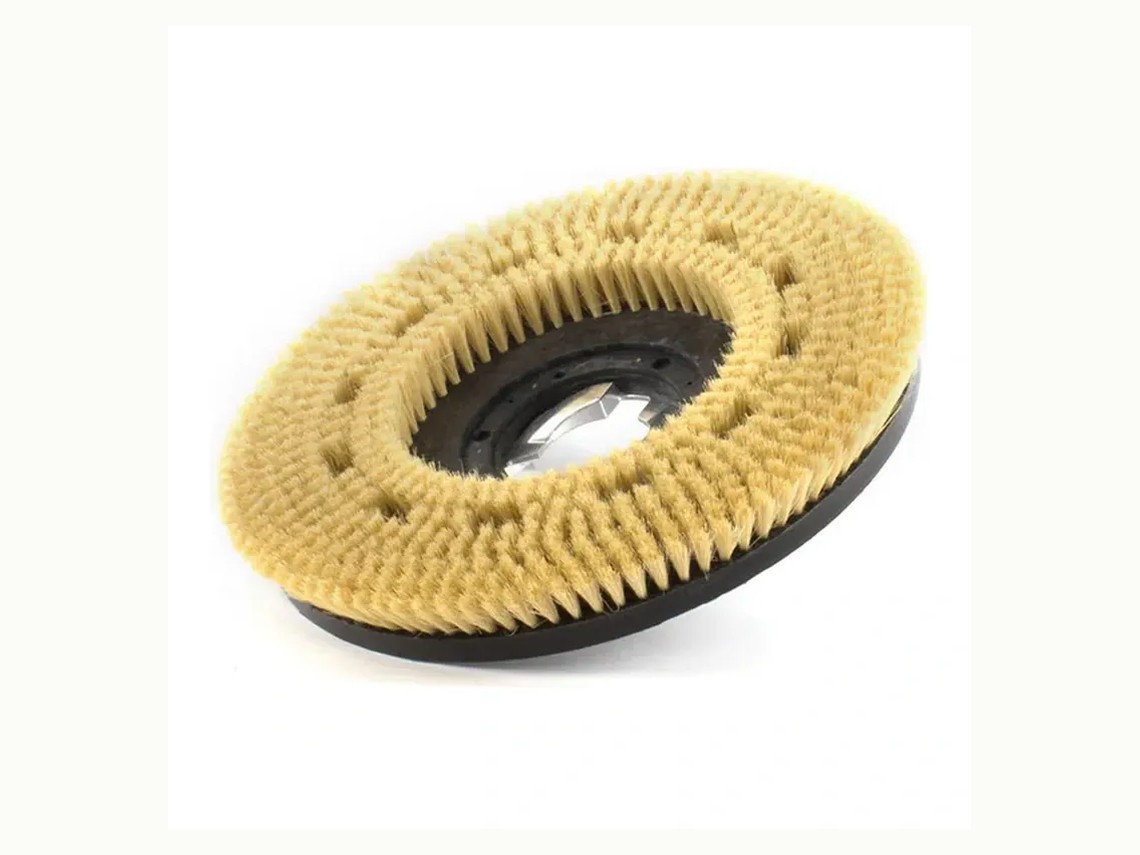
The challenge with disc brushes lies not in the bristles but in the backing plate. The larger the disc diameter and the higher the rotational speed, the more critical the backing plate rigidity and dynamic balance become; otherwise, even if the bristles are uniform, the contact pressure will be uneven.
- Disc Brushes
- Nylon
- PP
- Abrasive filament
- Silicon carbide
- Polishing
- Disc diameter
- φ50 – φ500 mm
- Bore / Interface
- Matched to the Equipment Spindle
- Filament material
- Nylon / PP / Abrasive Filament / Silicon Carbide Abrasive Filament
- Filament Diameter
- 0.08 – 0.50 mm
- Bristle Length
- 10 – 60 mm
- Tuft density
- Adjustable
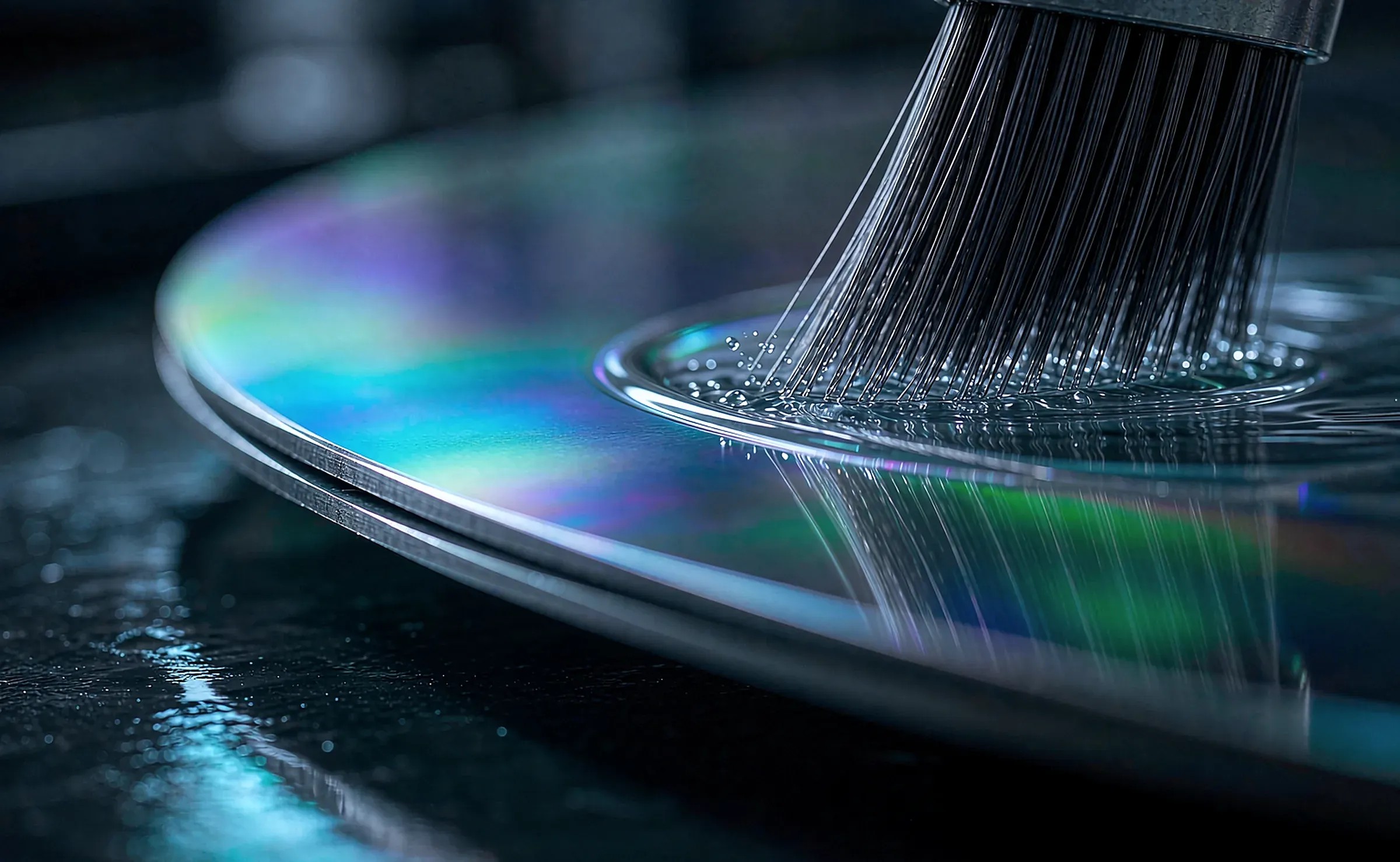
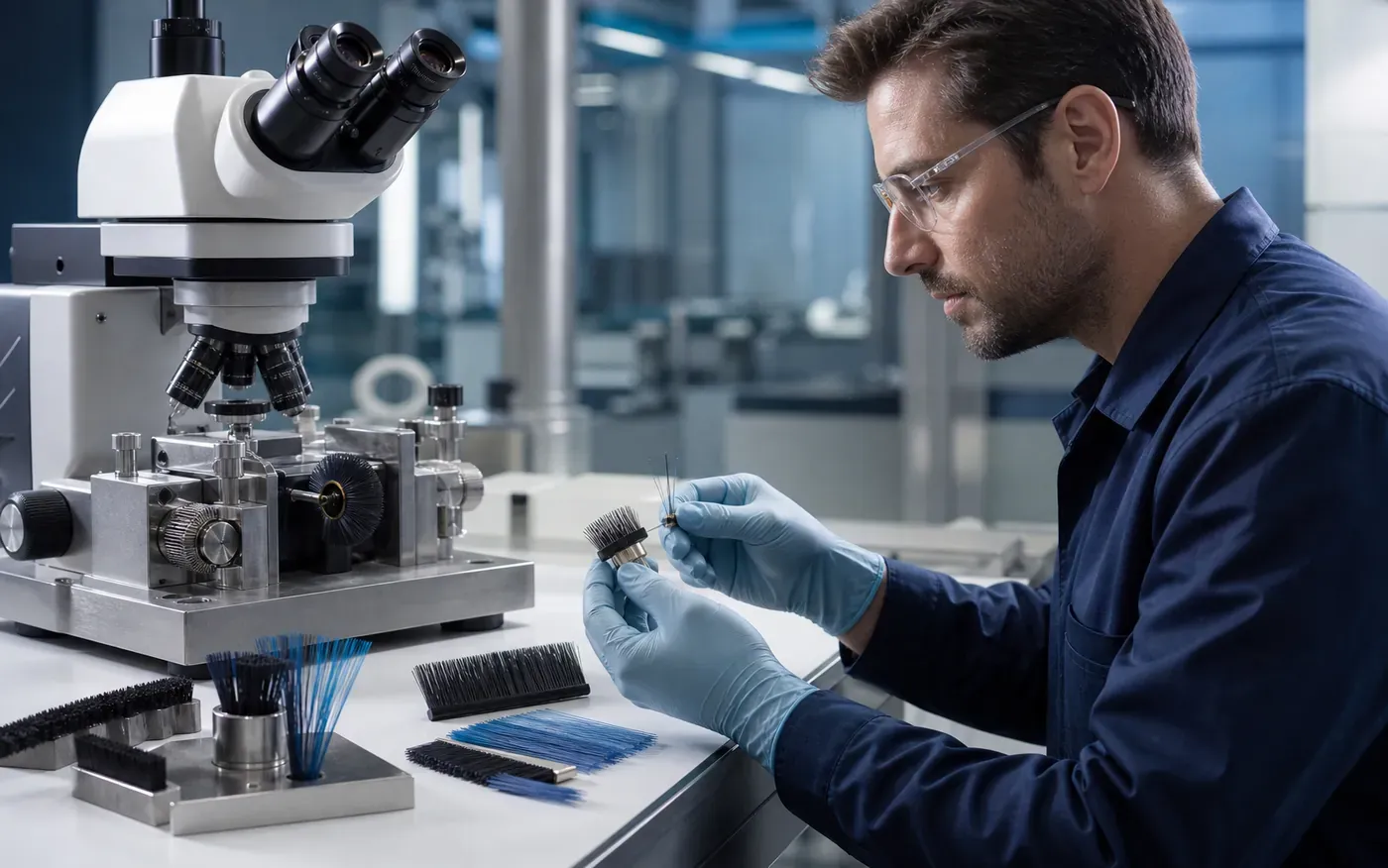
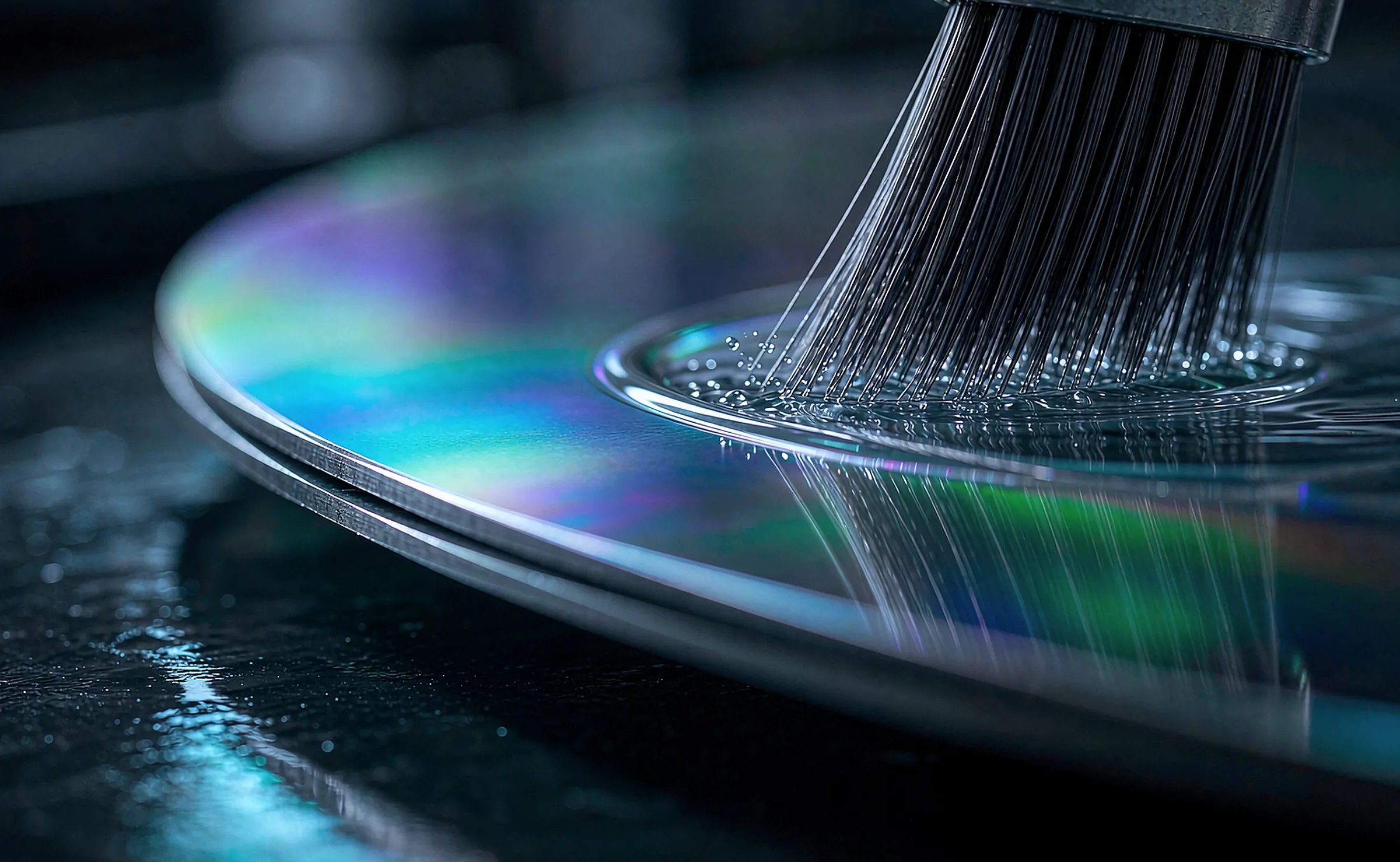
The polishing disc brush is a disc-shaped brush mounted on the spindle of a polishing machine or grinding equipment. It is used for polishing pad cleaning, edge polishing, and surface finishing.Common Supply Ranges: Disc diameter φ50–φ500 mm; filament diameter 0.08–0.50 mm; bristle length 10–60 mm; backing plate options include aluminum / stainless steel / engineering plastic; bristle density is adjustable. Suitable for cleaning polishing pads and surface treatment after deburring; abrasive filaments introduce cutting force, so abrasive-free nylon filaments should be used for finished surfaces. The above represents the supply range, not material limit values. Actual results vary with formulation, brush position, and operating conditions, and must be verified on sample parts and the equipment.
Why it matters Three essential questions
Uneven Polishing on the Disc Surface
Insufficient backing plate rigidity causes the center to depress under pressure. Select the backing plate thickness and material according to the disc diameter and pressure, and add reinforcement ribs if necessary.
Pronounced Vibration at High Speed
Dynamic balancing was not performed or the weighting is improper. Perform dynamic balancing at the operating speed and specify the allowable tolerance.
Bristles Bend Over and Polishing Efficiency Declines
Insufficient filament resilience or inadequate temperature resistance. Select materials according to the operating temperature and use temperature-resistant filaments in hot-press sections.
Specification Specification Parameter Ranges
| Parameter | Common ranges / options | Description |
|---|---|---|
| Disc diameter | φ50 – φ500 mm | The backing plate deformation of large-diameter brushes must be evaluated |
| Bore / Interface | Matched to the Equipment Spindle | Interfaces such as flanges, snap fasteners, and threaded connections can be used |
| Filament material | Nylon / PP / Abrasive Filament / Silicon Carbide Abrasive Filament | Select according to the polishing objective and material removal amount |
| Filament Diameter | 0.08 – 0.50 mm | Fine filaments for fine polishing; coarse filaments for material removal and deburring |
| Bristle Length | 10 – 60 mm | Length and rotational speed jointly affect contact pressure |
| Tuft density | Adjustable | The higher the density, the more uniform the grinding per unit area |
| Backing plate material | Aluminum / stainless steel / engineering plastic | Balance rigidity and chemical resistance |
| Dynamic balancing | Classified into G grades according to rotational speed | Measurement records can be attached upon delivery |
| Temperature resistance | Classify by Filament Material | Special material selection is required for high-temperature operating conditions |
| End-face flatness | Classified by disc diameter | Affects polishing uniformity |
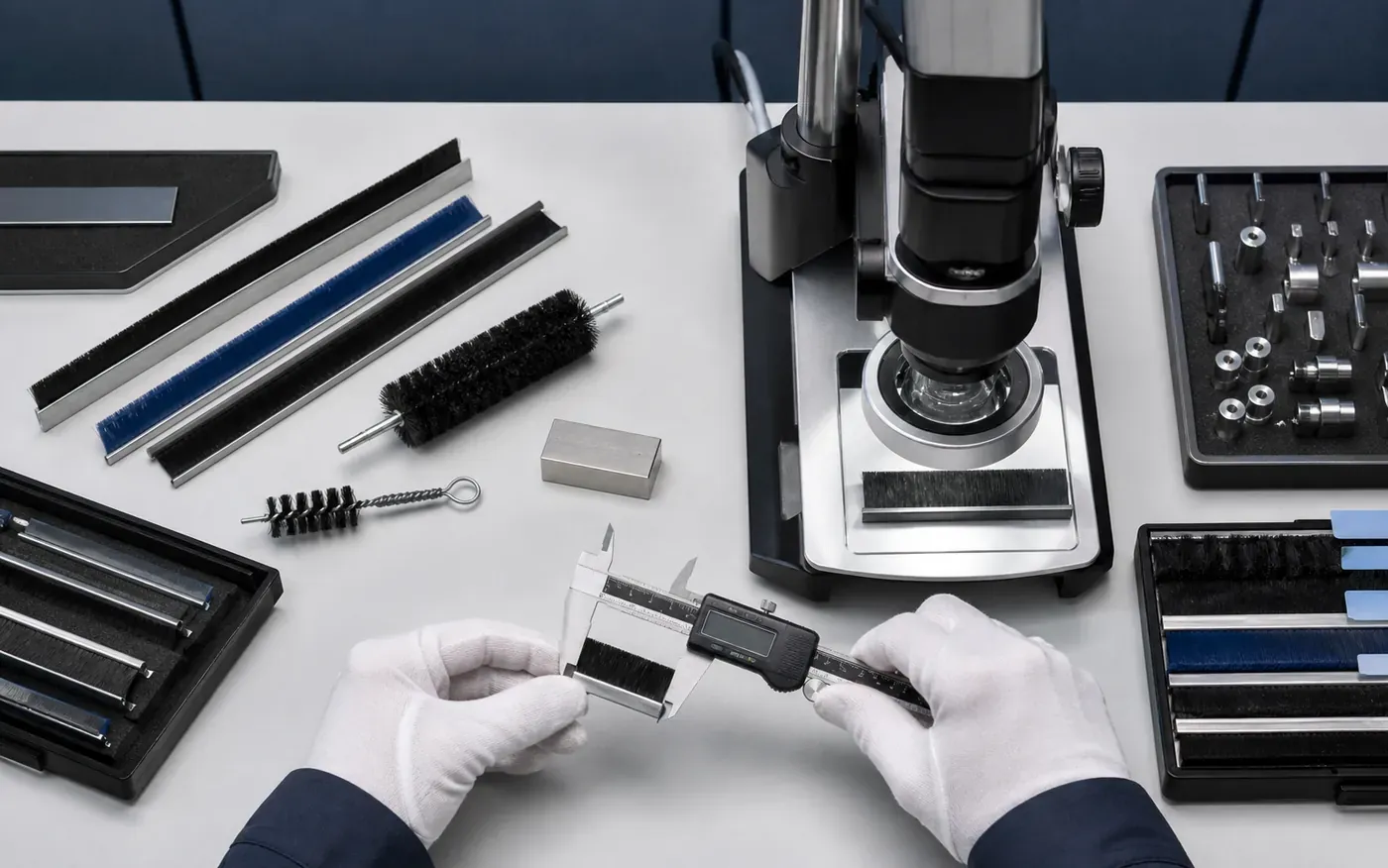
The table lists common ranges, not extreme values. Actual specifications shall be confirmed according to the brush-position drawing and operating conditions; where specific limits apply, mutually agreed technical documents shall prevail.
Configurations Structural configuration
Flat disc brush
Full-surface filament implantation, suitable for large-area uniform polishing and cleaning.
Annular disc brush
Hollow or annular arrangement, avoiding central structures, for edge polishing.
Abrasive filament disc brush
Contains abrasive filaments, used for deburring and surface coarse polishing.
Replaceable-segment disc brush
Individual segments can be replaced, reducing maintenance costs.
FAQ Product selection and communication
What are the respective roles of disc brushes and roller brushes in polishing?
Can abrasive filament disc brushes cause overcutting?
Can large-diameter disc brushes be dynamically balanced?
Customer requirements
Leave your contact details and requirements so we can get in touch.