
PVA Wafer Cleaning Brush Rollers
- Roller Brushes
- PVA
- Wafer cleaning
- Outer Diameter
- φ40 – φ160 mm
- Inner / Shaft Diameter
- φ8 – φ50 mm
- Effective Length
- ≤ 1200 mm
- Pore Size
- 30 – 100 μm
- Open-area ratio
- Categorized by formulation
- Hardness
- 3 – 15 Shore A(A0–A15)
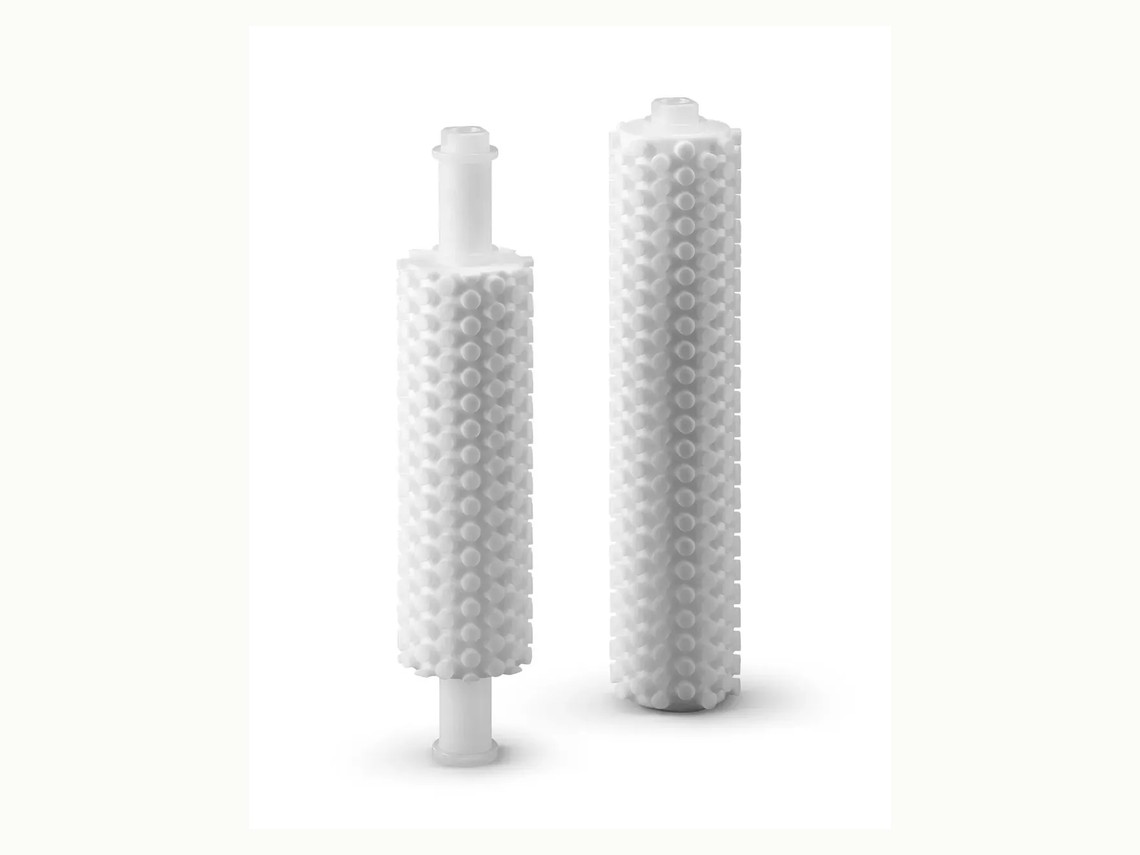
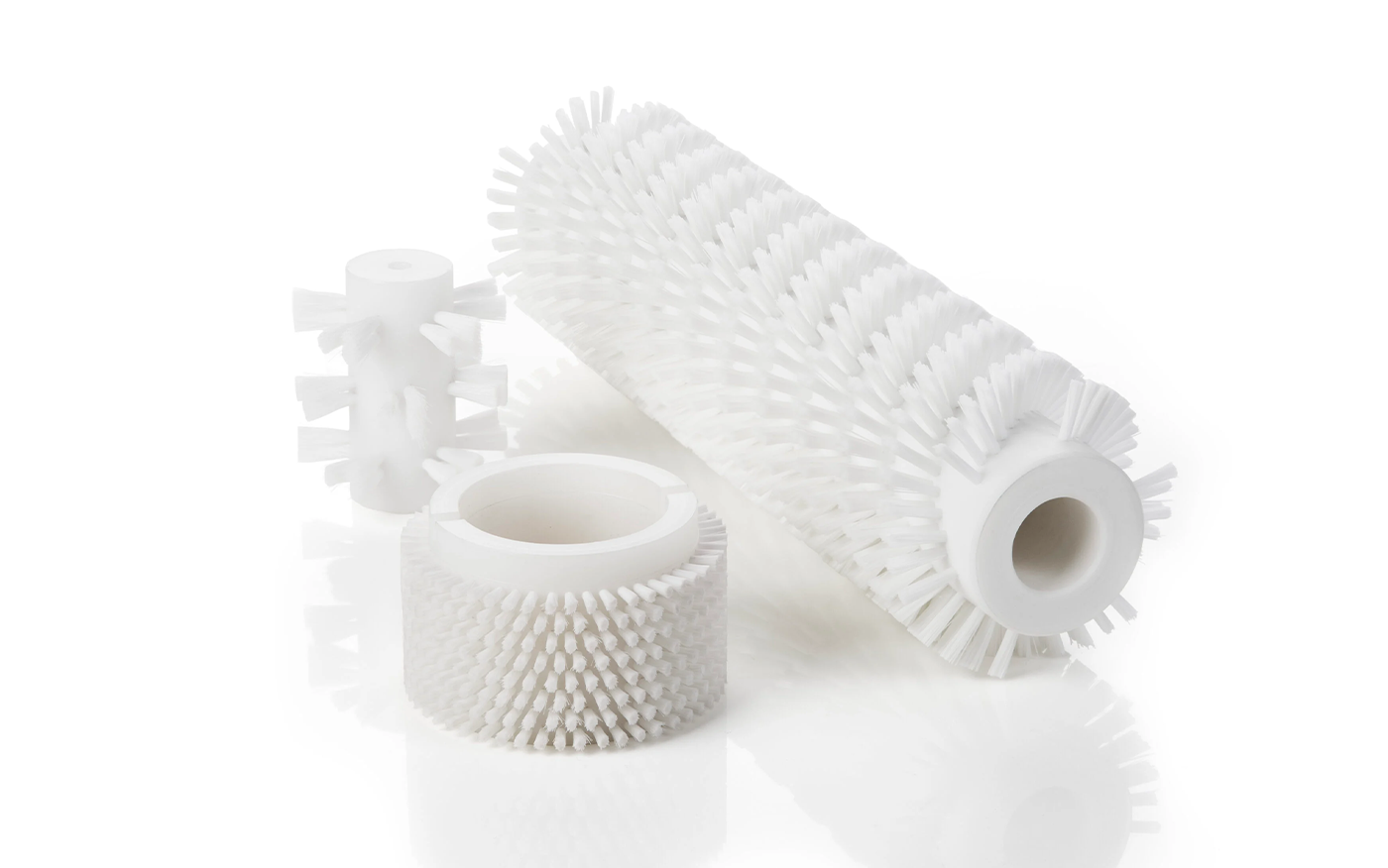
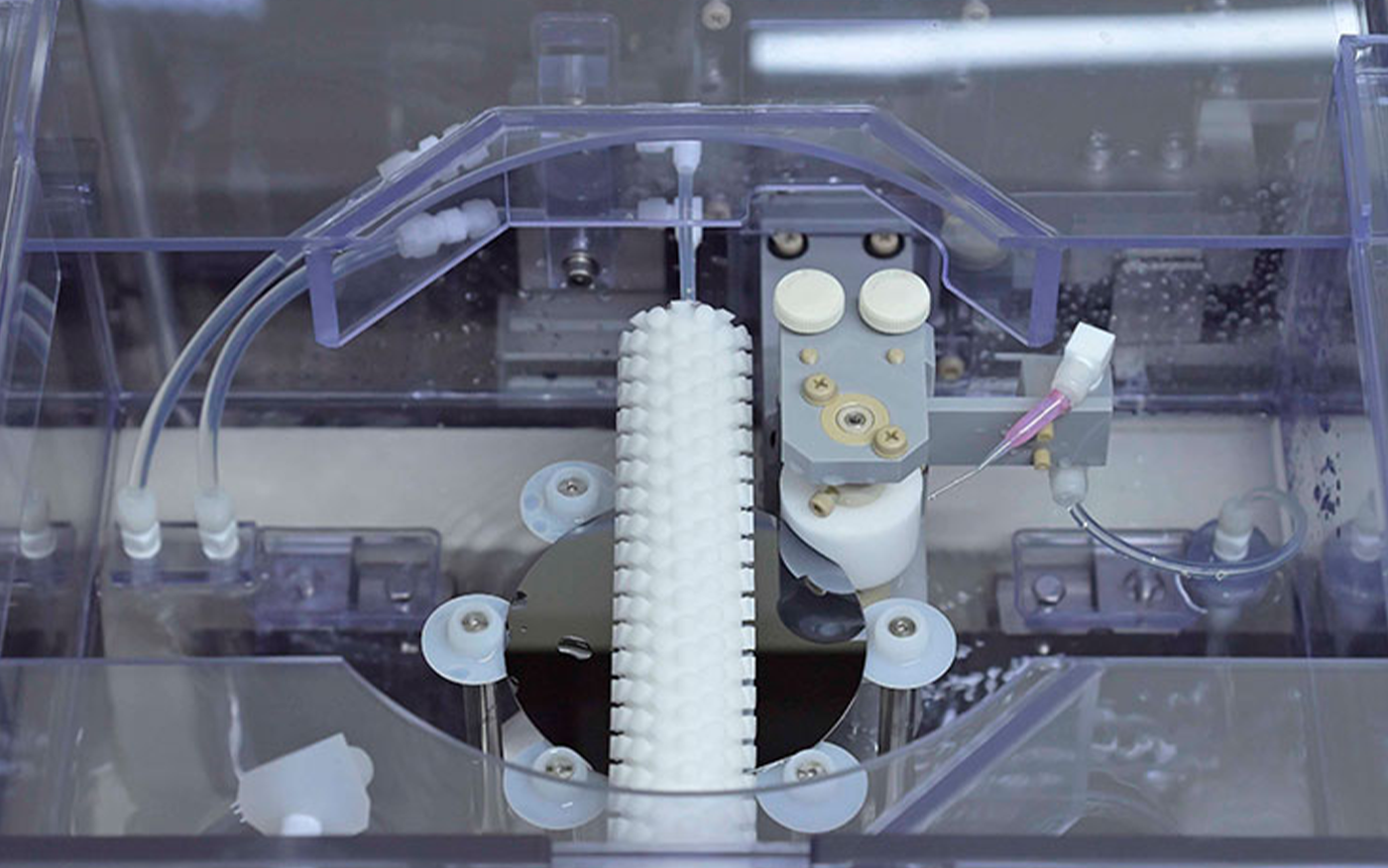
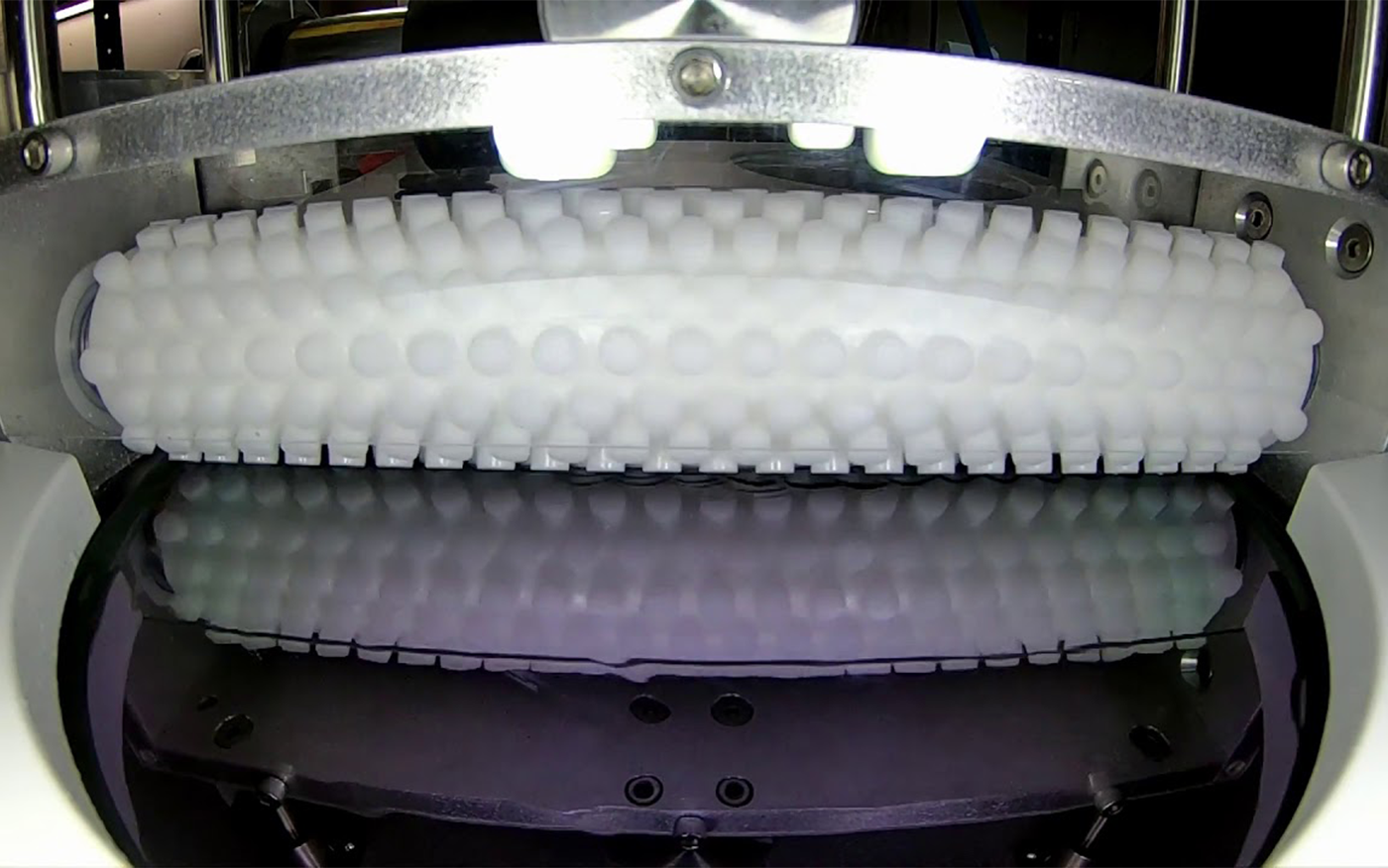
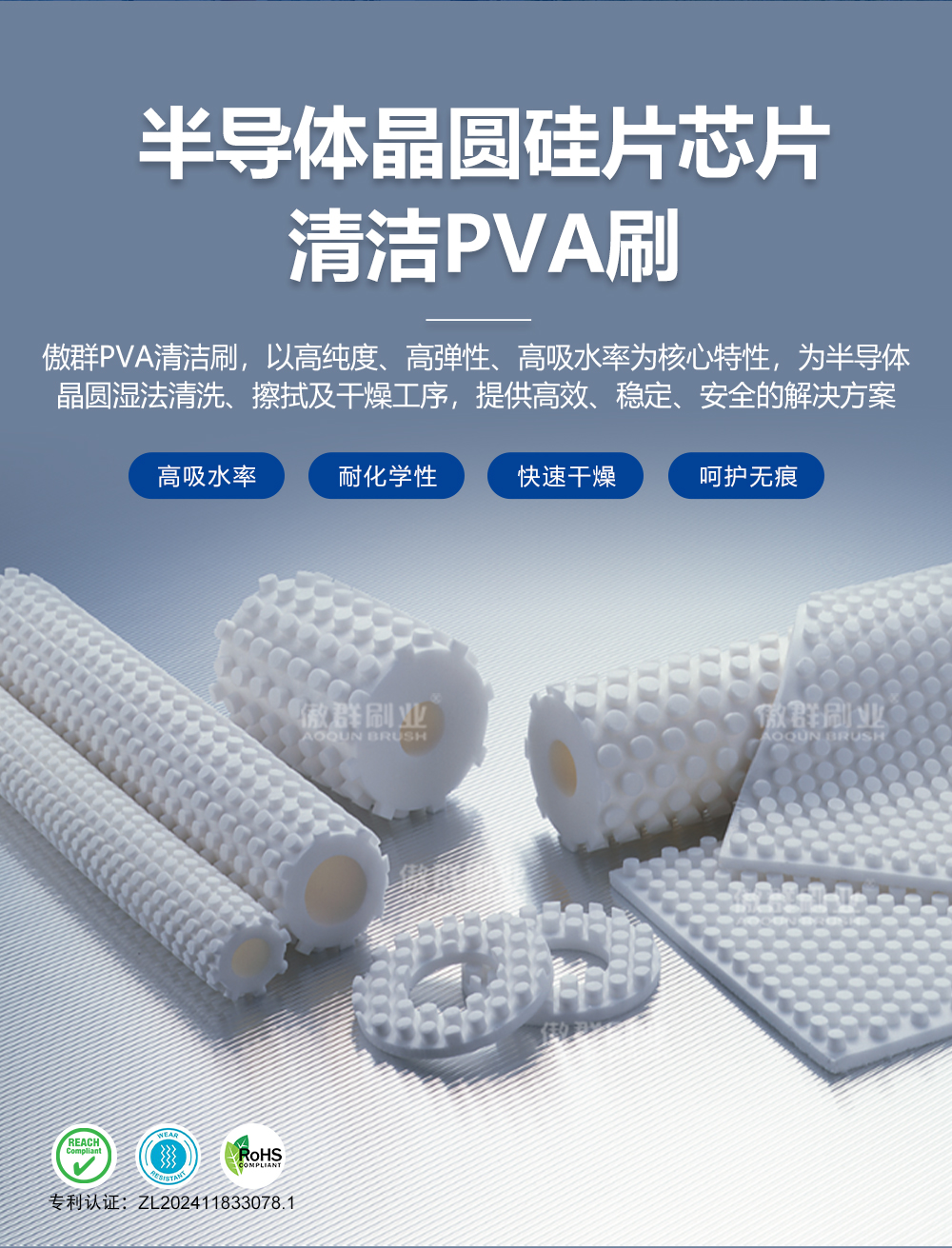
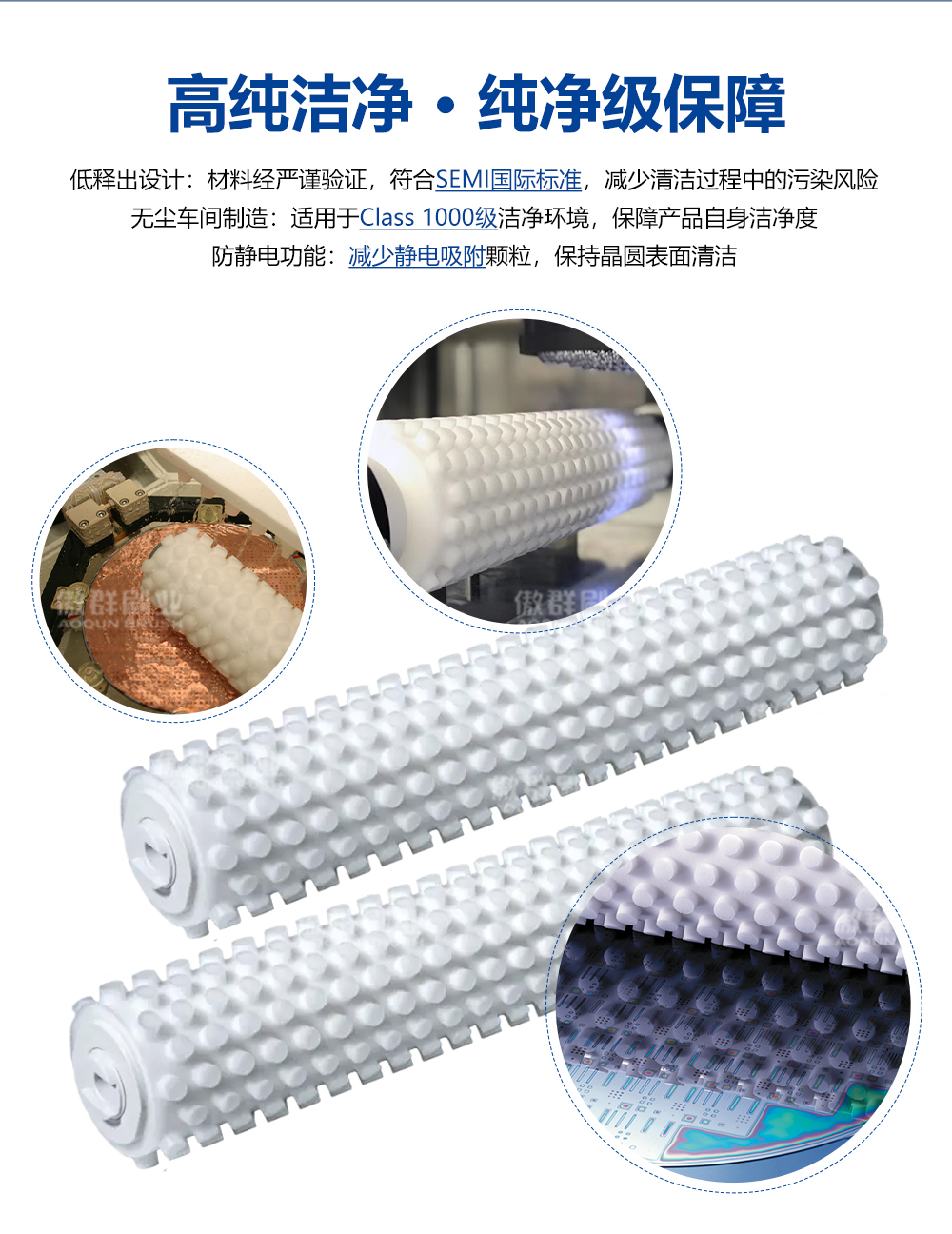
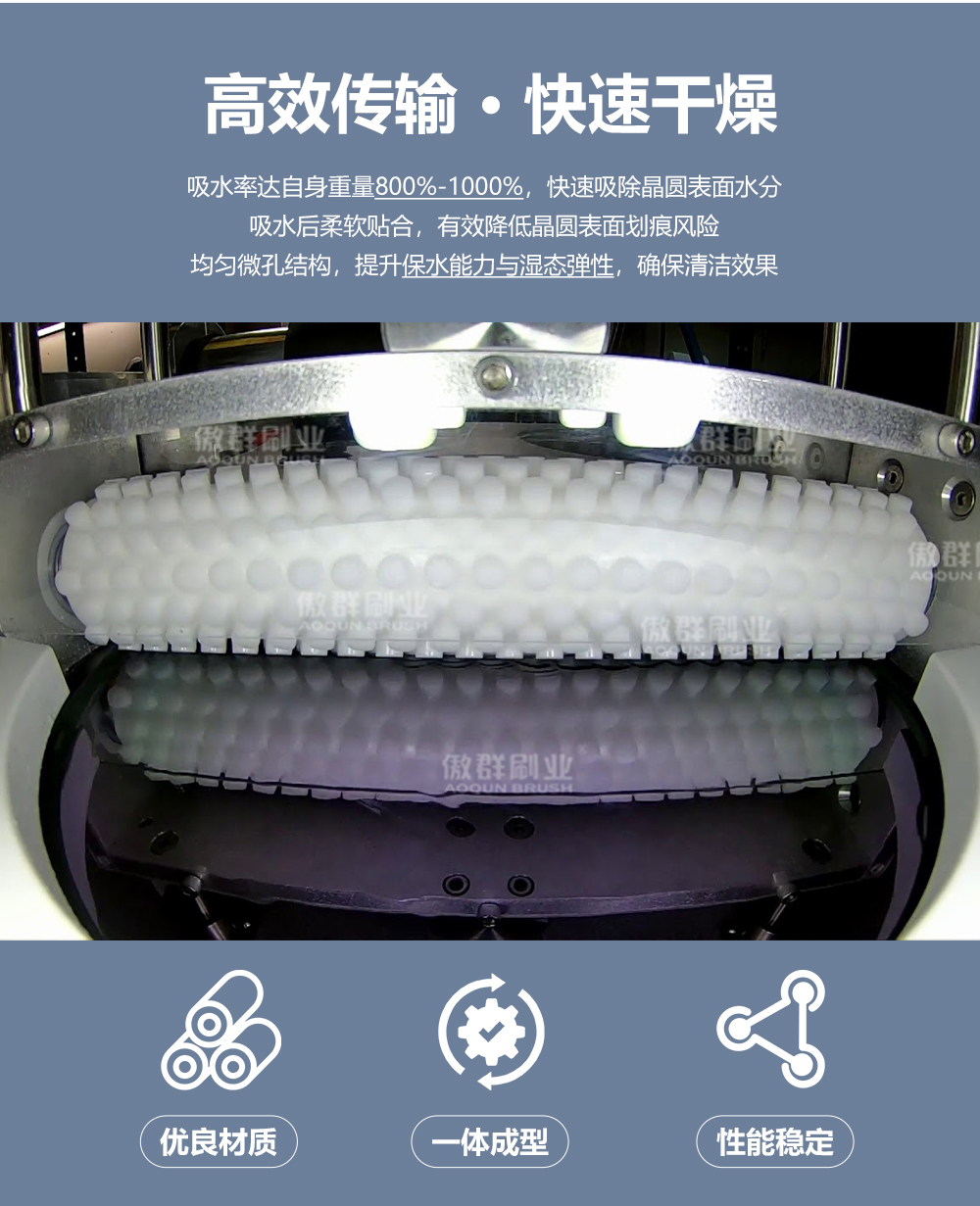
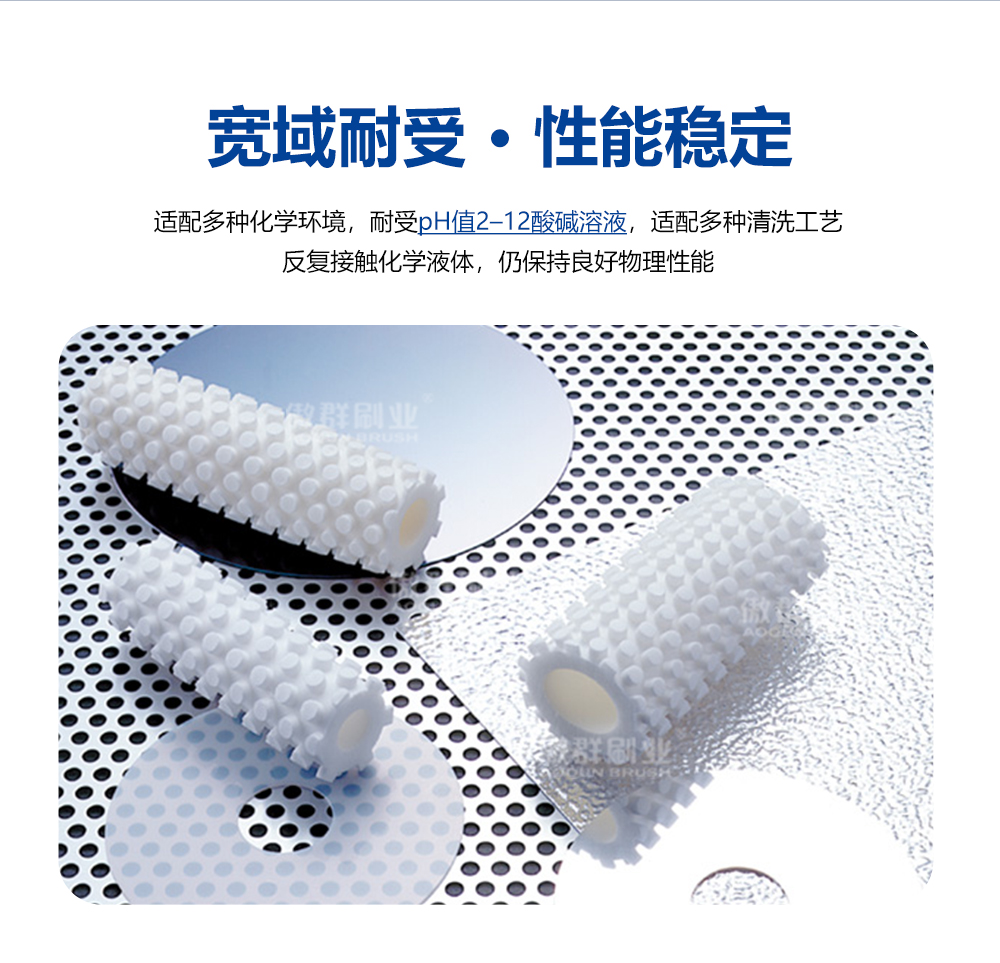
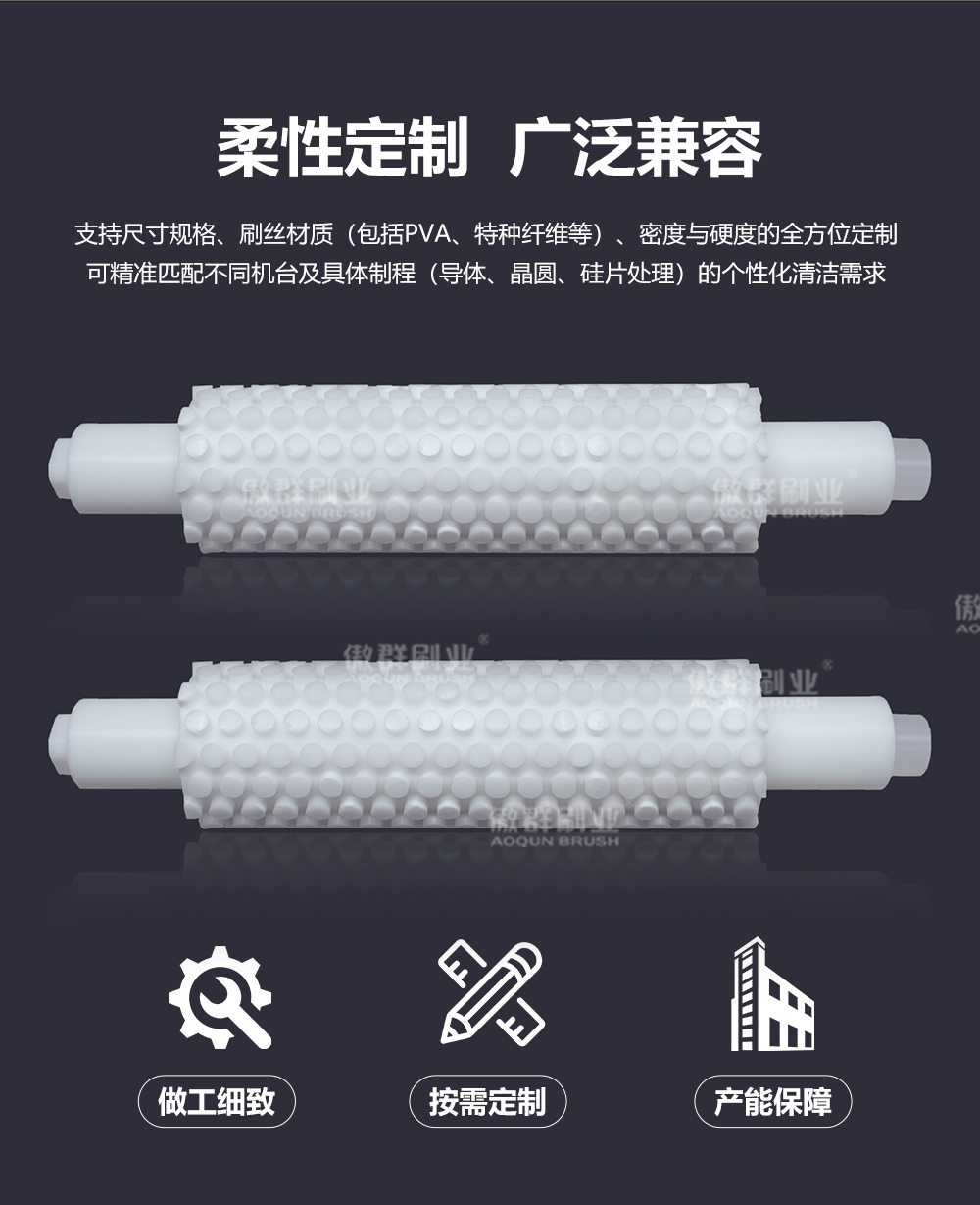
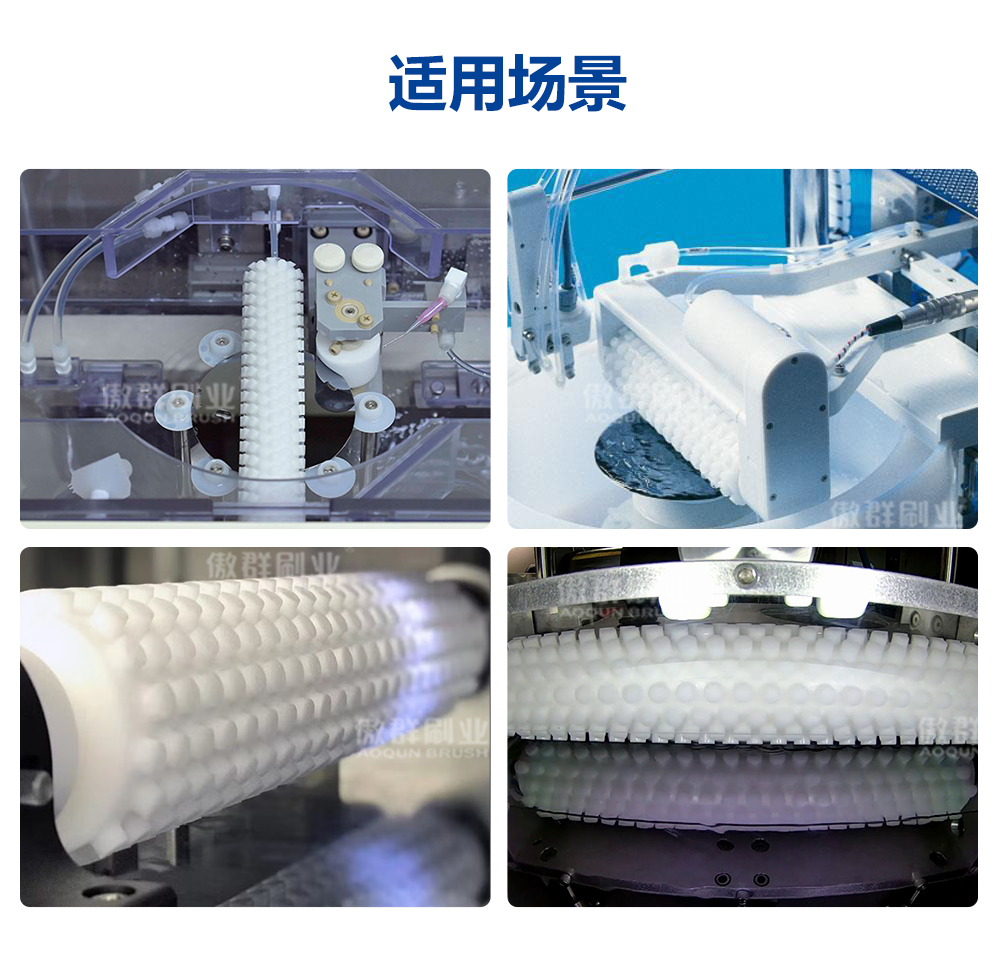
PVA wafer-cleaning brush rollers are roller-shaped cleaning components made from acetalized polyvinyl alcohol foamed material with an open-cell structure. They remove particles from wafer surfaces through capillary action in the pores rather than by scraping them off with bristles.Common Supply Ranges: Outside diameter φ40–φ160 mm, bore φ8–φ50 mm, effective length ≤1200 mm, pore size 30–100 μm, hardness 3–15 Shore A, and continuous operating temperature from ambient to 60 ℃. Four surface configurations are available: flat, nodular, slotted and dimpled. Suitable for front-end brush cleaning and post-CMP cleaning stages. Not suitable for strongly oxidizing systems or conditions above 60 ℃; PFA filaments should be used in such conditions. These are supply ranges, not material limits. Actual results vary with formulation, brush position and operating conditions, and must be validated with samples on the equipment.

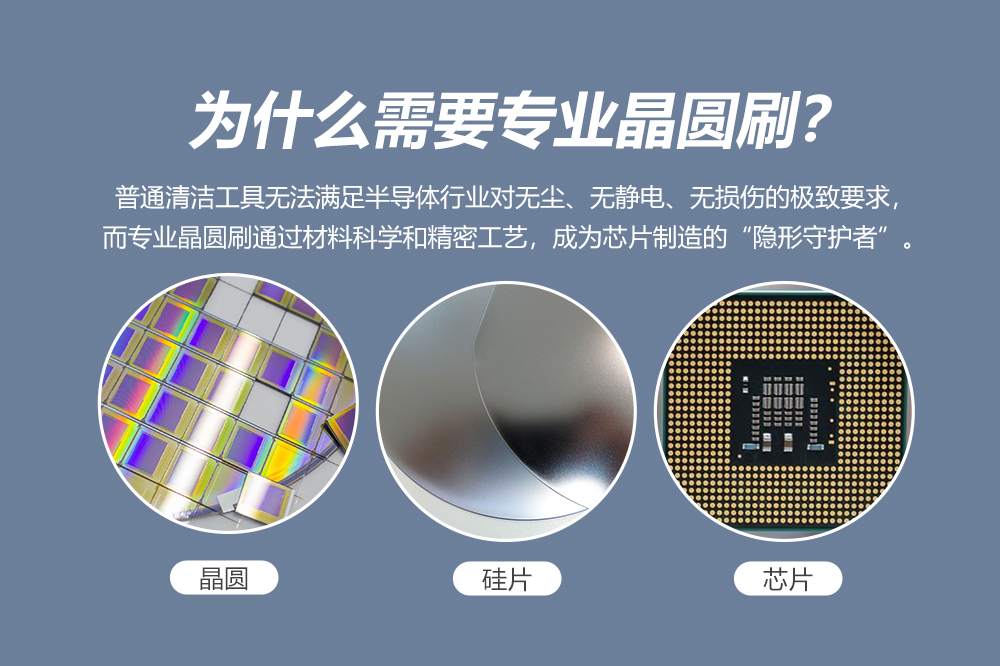
Why it matters Three essential questions
Particle Removal Rate Cannot Be Improved
The pores on the brush roller surface are clogged with grinding debris, slurry, and silicon powder, causing the capillary channels to fail and turning cleaning into “wiping dry.” Pore-unclogging inspections and water-absorption rate retesting must be performed batch by batch rather than waiting until scratches appear.
Arcuate Scratches Appear on Wafer Surfaces
End-face mold flash, inconsistent knot height, or shaft-end runout can concentrate contact pressure along an arc. We use dual controls for dynamic balance and end-face flatness and provide runout limits based on the brush-position rotational speed.
Particle Shedding and Metal-Ion Extractables
Low-molecular-weight residues, unclean cut end faces, and packaging contamination are the three most common sources. A low-extractables formulation + end-face ultrasonic cleaning + individual clean-bag packaging are the default configuration we deliver.
Specification Specification Parameter Ranges
| Parameter | Common ranges / options | Description |
|---|---|---|
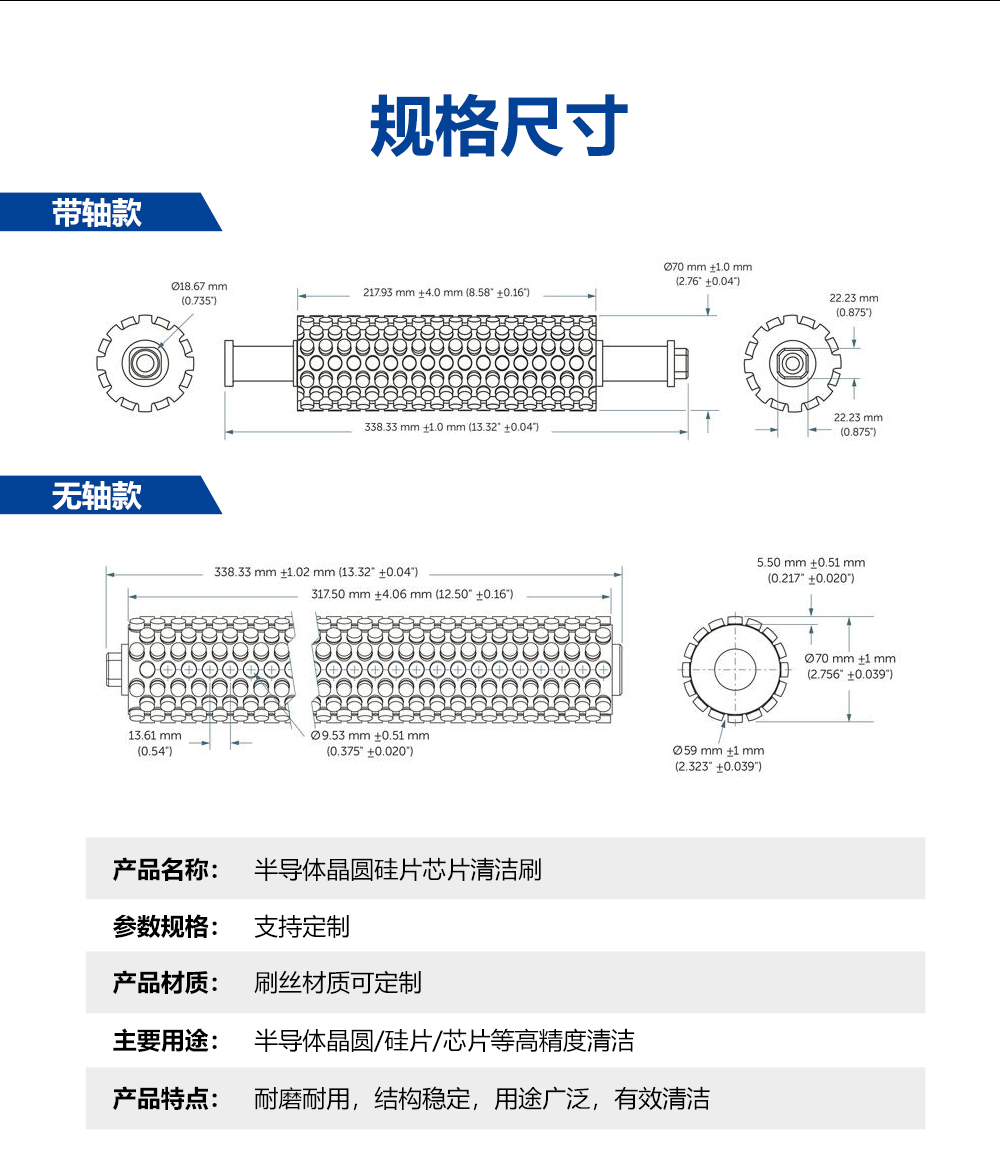
| Outer Diameter | φ40 – φ160 mm | Selected according to brush-position space and contact wrap angle; common options: φ60 / φ80 |
| Inner / Shaft Diameter | φ8 – φ50 mm | Compatible with stainless steel shafts, PFA-coated shafts, or inflatable shafts |
| Effective Length | ≤ 1200 mm | For long rollers, the mid-span deflection and dynamic balance grade must be evaluated |
| Pore Size | 30 – 100 μm | Smaller pore sizes are more effective at capturing submicron particles but are more prone to clogging |
| Open-area ratio | Categorized by formulation | Open porosity is directly related to water absorption rate; comparative samples can be provided |
| Hardness | 3 – 15 Shore A(A0–A15) | Soft rollers conform to curved surfaces, while hard rollers are suitable for removing stubborn residues |
| Water absorption | After saturation, inspect each piece again | Delivery includes batch water absorption records to facilitate production-line baseline establishment |
| End-face configuration | Flat roller / Nodular / Slotted / Dimpled | Nodules and dimples improve drainage and reduce adhering water films |
| Dynamic balancing | Classified into G grades according to rotational speed | The operating speed must be noted on the drawing for high-speed brush positions |
| Chemical resistance | Resistant to weak acids, weak alkalis, and common cleaning solutions | Highly oxidizing systems must be disclosed in advance for separate material selection |
| Operating temperature | Room temperature – 60 ℃ | Exceeding the temperature range accelerates aging and pore collapse |
| Cleanroom packaging | One piece per clean bag + batch identification | Cleanliness and extractables information can be provided as required |
The table lists common ranges, not extreme values. Actual specifications shall be confirmed according to the brush-position drawing and operating conditions; where specific limits apply, mutually agreed technical documents shall prevail.
Configurations Structural configuration
Flat roller Flat
Uniformly perforated over the entire surface, suitable for large-area uniform scrubbing and conveyor-type cleaning sections.
Nodular Nodular
Regular raised nodules on the surface reduce water-film adhesion, improve drainage, and prevent particles from remaining on the roller surface.
Slotted Slotted
Axial or helical grooves provide rapid drainage and enhanced cleaning at edges.
Dimpled Dimpled
Surface dimples retain water, making them suitable for maintaining a liquid film under low-flow spray conditions.
FAQ Product selection and communication
How should the pore size of a PVA brush roller be selected? What is the difference between 30μm and 100μm?
Should a nodular, slotted, or dimpled roller be selected?
How often should brush rollers be replaced?
Can immersion extractables or cleanliness data be provided?
Customer requirements
Leave your contact details and requirements so we can get in touch.