
Wafer Thinning Cleaning Brushes
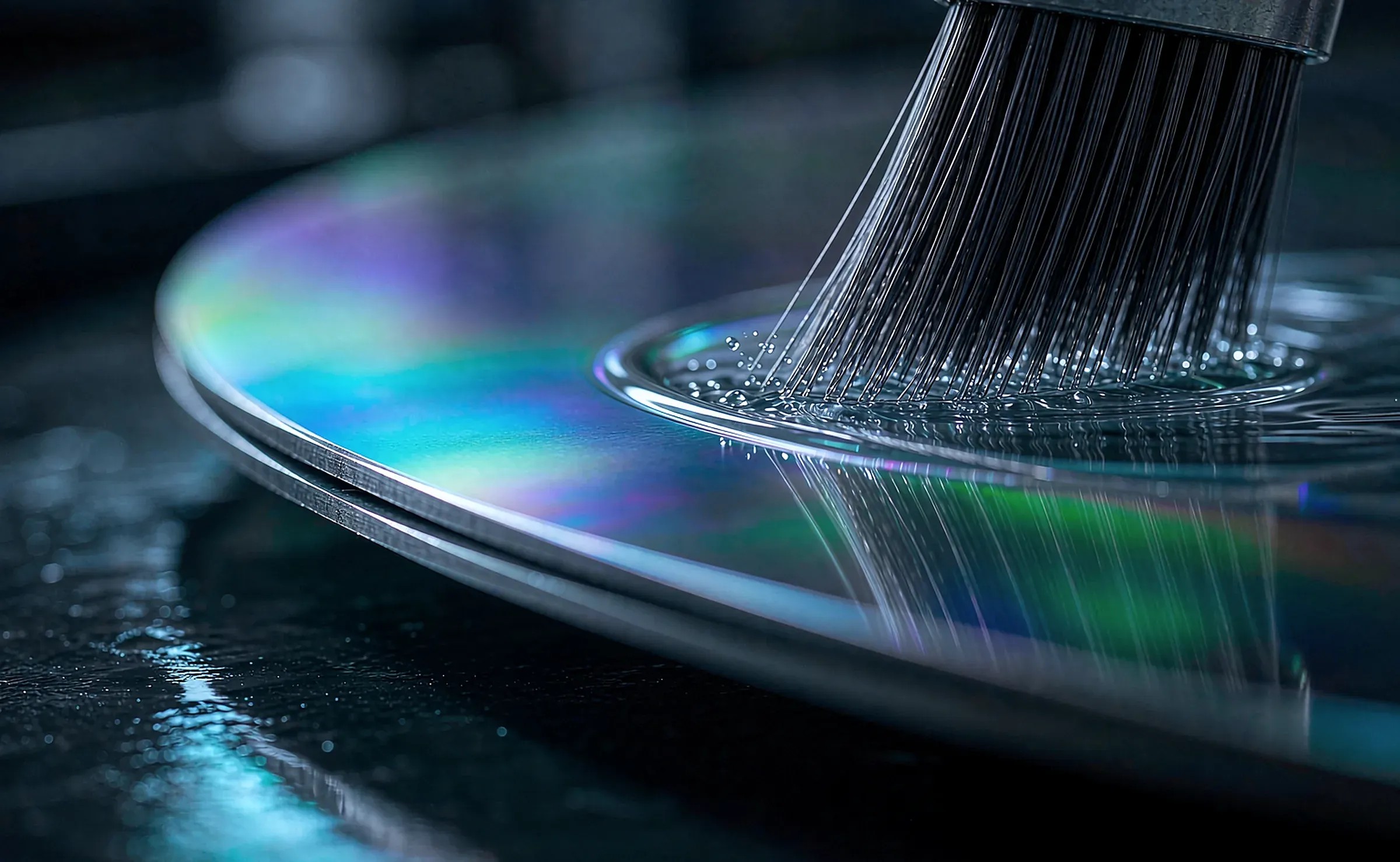
After thinning, the wafer is extremely thin and fragile, so the first factor to control during cleaning is pressure, rather than cleaning power. Silicon powder particles are relatively large and present in substantial quantities; soft brushes combined with sufficient rinsing remove them more safely than hard scraping by the brush filaments.
- Roller Brushes
- Disc Brushes
- Strip Brushes
- PVA
- Nylon
- Post-thinning cleaning
- Configuration
- Brush roller / Disc brush / Strip brush
- Outer diameter / Disc diameter
- φ40 – φ300 mm
- Filament material / Material
- PVA sponge / Soft nylon / PVA disc
- Hardness
- Soft grade
- Compatible size
- 4 / 6 / 8 / 12 inches
- Rinse coordination
- Increasing the flow rate simultaneously is recommended
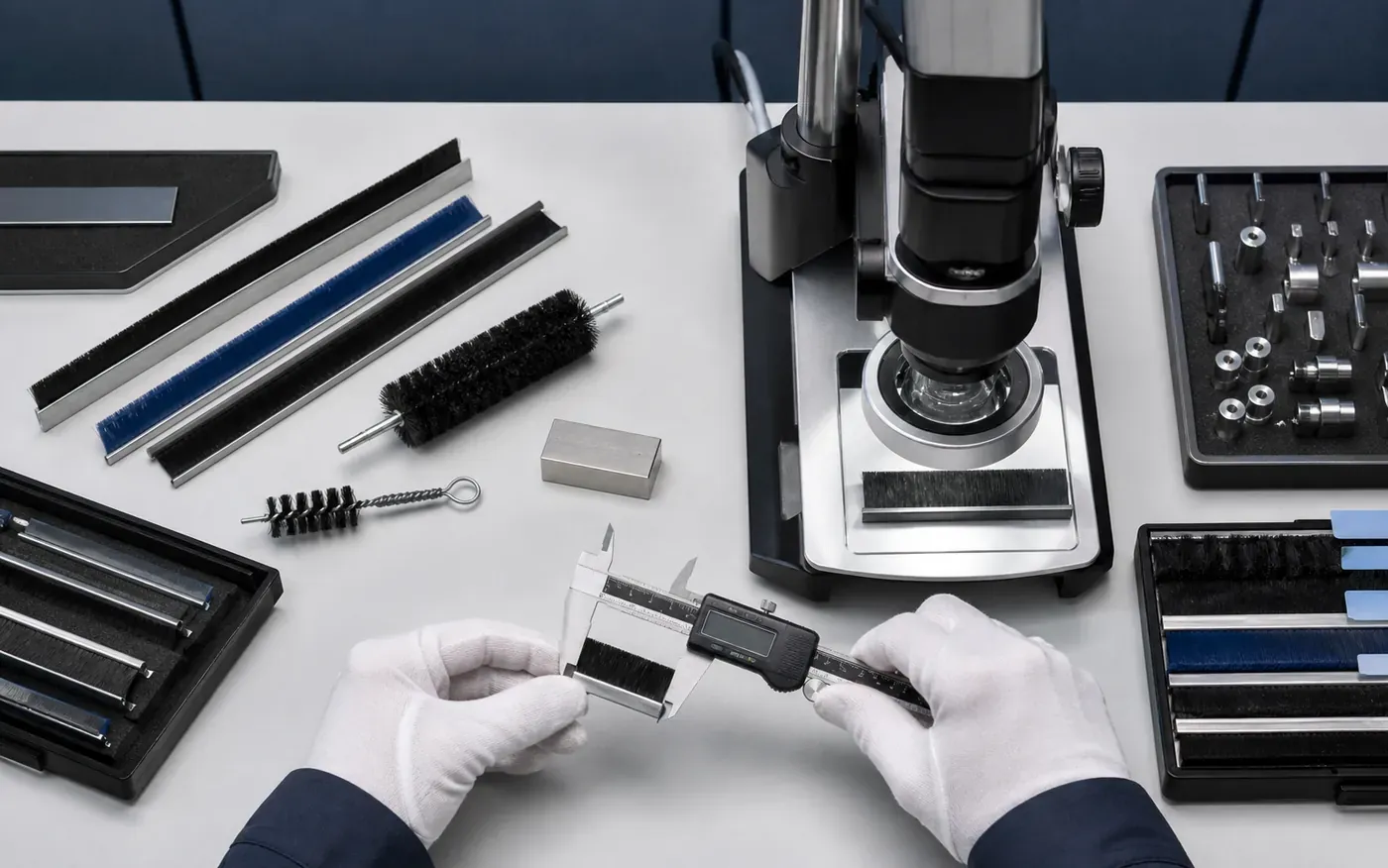
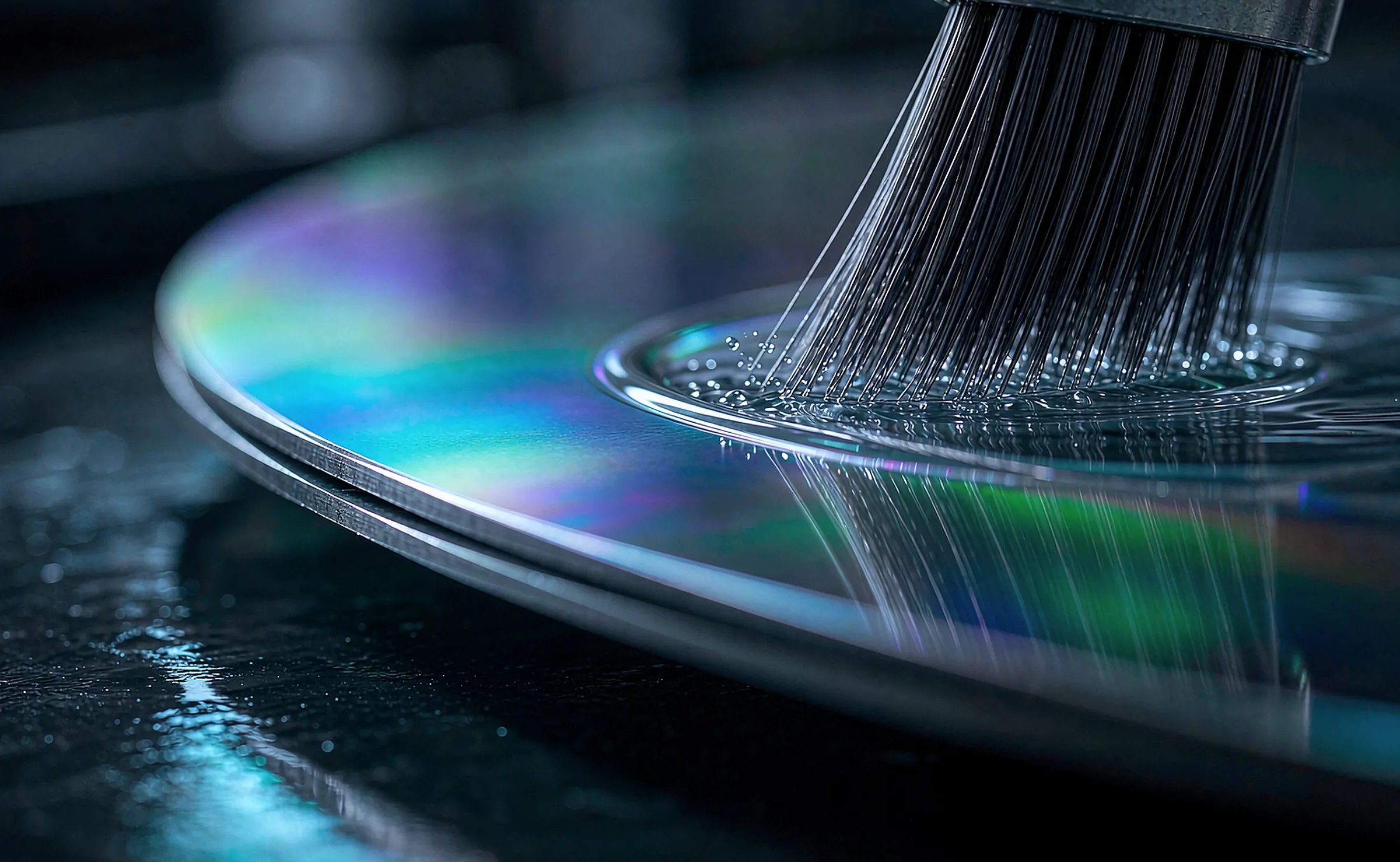
Wafer thinning cleaning brushes are primarily available as soft brush rollers, disc brushes, and strip brushes for removing silicon powder and grinding residue after backside grinding (BGBM).Common Supply Ranges: Outer diameter / Disc diameter φ40–φ300 mm, compatible with 4 / 6 / 8 / 12-inch wafers, soft-grade hardness, and deburring and transition treatment on the end faces. Suitable for low-pressure brushing after thinning, coordinated with high-flow rinsing; with a high silicon powder load, increasing the rinse flow rate and shortening the cleaning interval are recommended. The above represents the supplied range rather than material limits. Actual results vary with formulation, brush position, and operating conditions, and shall be verified on the tool using samples.
Why it matters Three essential questions
Warping or microcracking after wafer cleaning
Excessive contact pressure. Use a lower-hardness brush and a brush holder with adjustable brush compression to reduce the pressure.
Silicon powder residue contaminating subsequent processes
A large amount of grinding residue and insufficient rinsing cause the brush to fill rapidly. Increase the rinse flow rate and shorten the brush cleaning interval.
Chipping at the dicing street edges
The brush filaments are too hard or contact is concentrated at the edges. Use soft brushes in edge areas and avoid chipping-sensitive areas.
Specification Specification Parameter Ranges
| Parameter | Common ranges / options | Description |
|---|---|---|
| Configuration | Brush roller / Disc brush / Strip brush | Select according to the tool cleaning-section structure |
| Outer diameter / Disc diameter | φ40 – φ300 mm | Determine according to the space available at the brush position |
| Filament material / Material | PVA sponge / Soft nylon / PVA disc | Focus on low pressure |
| Hardness | Soft grade | Prioritize reducing mechanical stress under thin-wafer operating conditions |
| Compatible size | 4 / 6 / 8 / 12 inches | According to wafer size and tool brush position |
| Rinse coordination | Increasing the flow rate simultaneously is recommended | A large amount of grinding residue cannot be sustainably handled by the brush alone |
| End treatment | Deburring + Transition | Reduce concentrated edge contact |
| Cleanroom packaging | Single cleanroom bag | Batch identification attached |
The table lists common ranges, not extreme values. Actual specifications shall be confirmed according to the brush-position drawing and operating conditions; where specific limits apply, mutually agreed technical documents shall prevail.
Configurations Structural configuration
Backside grinding cleaning brush roller
Primary brush for the post-grinding cleaning section, using soft materials at low pressure.
Grinding residue removal disc brush
Removes residual silicon powder from grinding marks at specific locations.
Pre-dicing cleaning brush
Removes surface particles before dicing to reduce chipping risk.
Thin-wafer conveyor cleaning strip brush
Low-contact dust removal along conveyor and carrier paths.
FAQ Product selection and communication
Is PVA required for thinning cleaning?
Will the thin-wafer cleaning brush hold the wafer?
Can the brushes be customized according to our tool's brush positions?
Customer requirements
Leave your contact details and requirements so we can get in touch.