

Semiconductor Equipment Strip Brushes
Strip brushes perform a wide range of functions in equipment: dust blocking, flow guidance, sealing, belt cleaning, and workpiece guidance. Their common features are a narrow installation space and low replacement frequency; however, once they fail, the entire line stops. Therefore, base rigidity and tuft retention strength are more important than the filaments themselves.
- Strip Brushes
- Nylon
- PP
- Abrasive filament
- Dust blocking and sealing
- Equipment cleaning
- Overall length
- ≤ 3000 mm
- Base material
- Aluminium alloy / stainless steel / galvanized steel
- Base cross-section
- U-type / F-type / H-type / custom
- Filament length
- 5 – 60 mm
- Filament material
- Nylon 6/66, PP, PBT, PFA, conductive filament, abrasive filament, horsehair
- Filament Diameter
- 0.05 – 0.50 mm
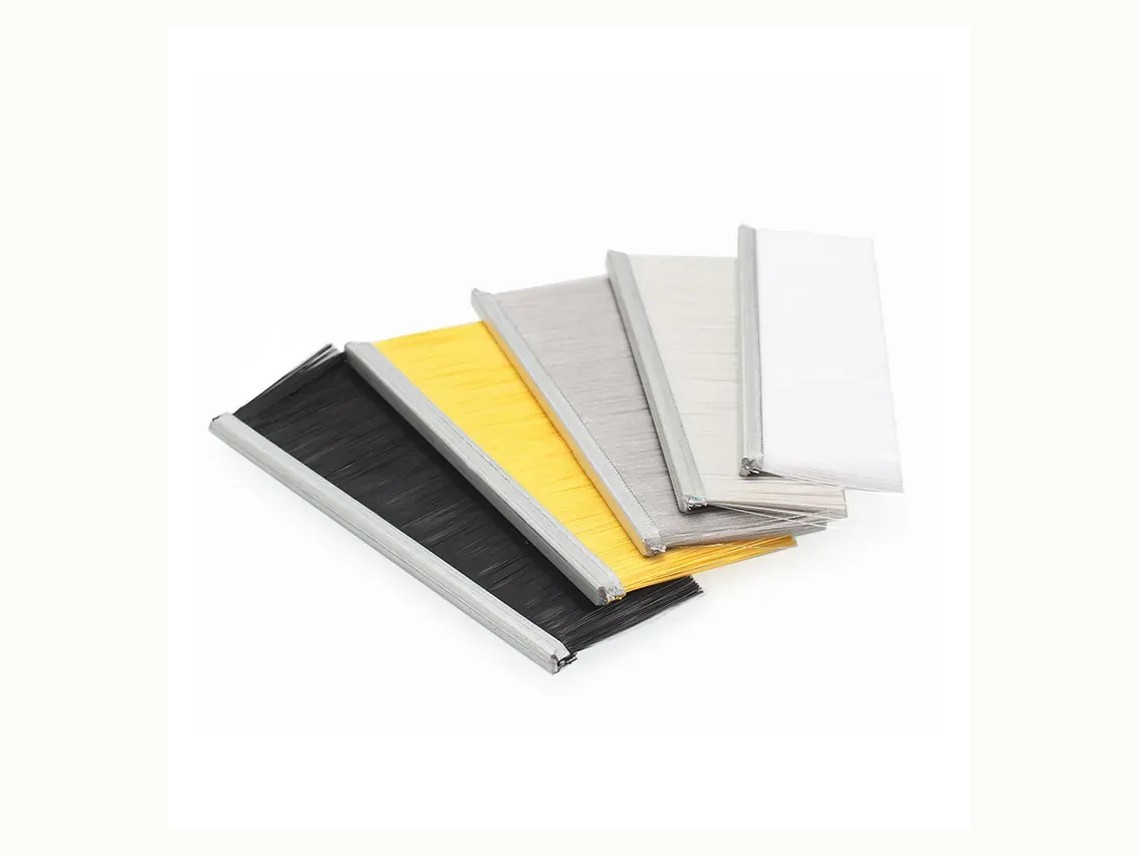
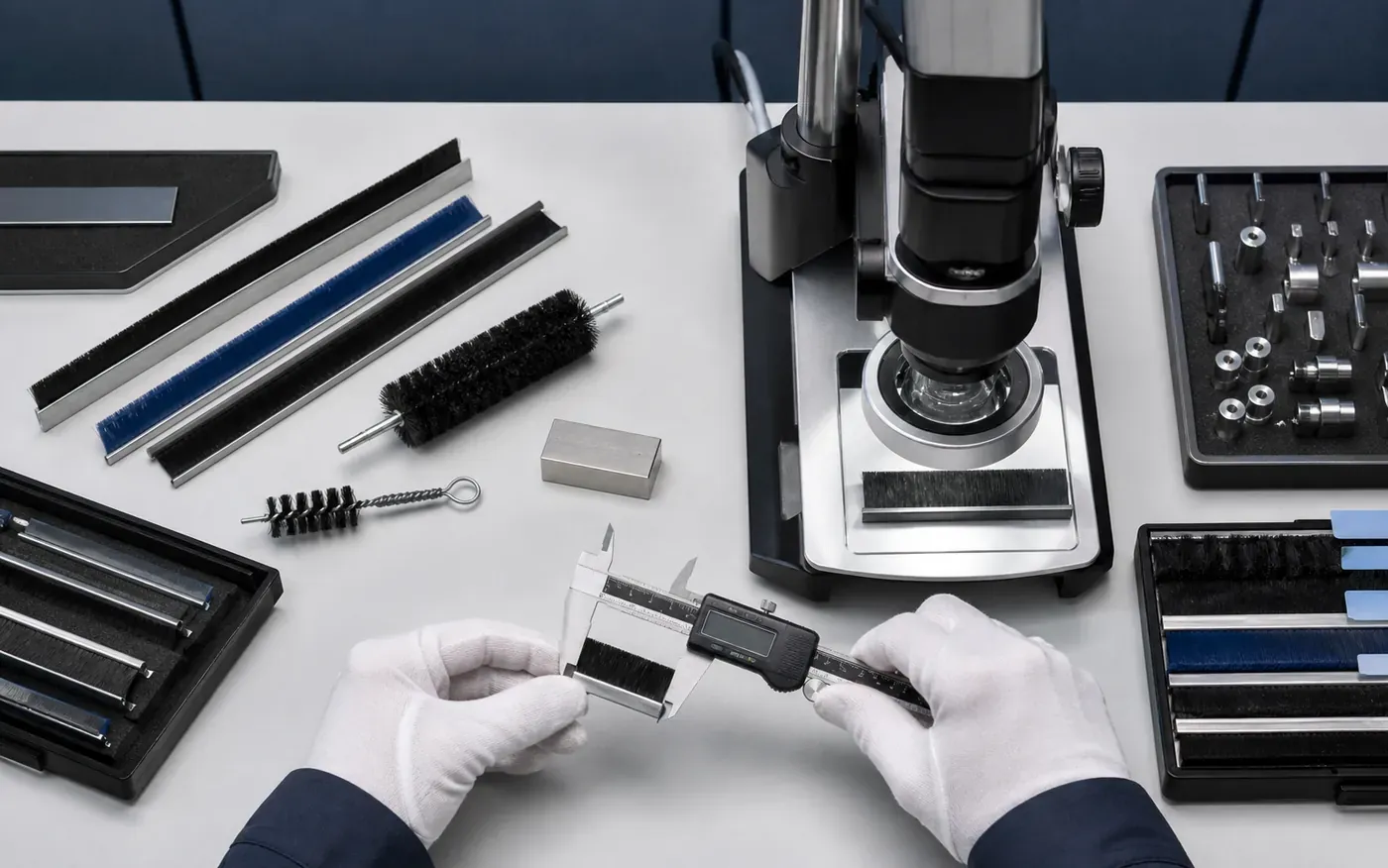
Semiconductor equipment strip brushes are strip-shaped cleaning tools with filaments mounted on U-type / F-type / H-type metal bases. They are used for dust blocking, sealing, and conveyor surface cleaning at equipment inlets and outlets.Common Supply Ranges: Overall length ≤3000 mm, filament length 5–60 mm, filament diameter 0.05–0.50 mm. Base material options include aluminum alloy / stainless steel / galvanized steel, with adjustable tuft density. Suitable for dust prevention and dust-blocking structures in cleanroom equipment. The seams between the base and filaments are prone to dust accumulation and should be disassembled and inspected according to the cleaning cycle. The above figures represent the supply range rather than material limit values. Actual results vary with the formulation, brush position, and operating conditions and must be verified on sample parts and the equipment.
Why it matters Three essential questions
Filaments pulling out of the strip brush base
Insufficient clamping force of the tufted strip or poor filament springback. Use a reinforced U-type clip and high-springback filaments, with end sealing.
Base deformation or inadequate conformity
Insufficient wall thickness of the aluminum profile and unsupported long spans. Increase the thickness according to the span or add intermediate supports.
Filament shedding in the cleanroom
Cut ends are unsealed, and static electricity causes filaments to attract dust. Seal the end faces with adhesive; conductive filaments are available.
Specification Specification Parameter Ranges
| Parameter | Common ranges / options | Description |
|---|---|---|
| Overall length | ≤ 3000 mm | Ultra-long brushes can be assembled in sections, with sealed joints |
| Base material | Aluminium alloy / stainless steel / galvanized steel | Aluminum or stainless steel is preferred in cleanrooms |
| Base cross-section | U-type / F-type / H-type / custom | Customized according to the mounting groove and fastening method |
| Filament length | 5 – 60 mm | Matched with the interference |
| Filament material | Nylon 6/66, PP, PBT, PFA, conductive filament, abrasive filament, horsehair | Selected according to temperature resistance, chemical resistance, and ESD requirements |
| Filament Diameter | 0.05 – 0.50 mm | Fine filaments for sealing, coarse filaments for cleaning |
| Tuft density | Adjustable | Higher density improves dust blocking |
| End treatment | Adhesive sealing / edge pressing / end cap | Prevents filament pullout and shedding |
| Temperature resistance | Categorized by filament material (nylon ≤100°C, PFA for higher temperatures) | Material must be changed for high-temperature sections |
| Mounting method | Bolts / snap fasteners / slide channel | Customized according to the equipment structure |
The table lists common ranges, not extreme values. Actual specifications shall be confirmed according to the brush-position drawing and operating conditions; where specific limits apply, mutually agreed technical documents shall prevail.
Configurations Structural configuration
Conveyor belt cleaning strip brush
Installed across the line to clean residual material from the belt surface; a vacuum hood improves performance.
Robot dust-proof strip brush
Installed around robots or guide rails to prevent particles from entering.
Cleanroom sealing strip brush
For sealing door gaps, pass-through windows, and air shower openings, using fine, high-density filaments.
Guidance / workpiece-blocking strip brush
Flexible guidance that avoids damage from rigid collisions.
FAQ Product selection and communication
How should the filament material for a strip brush be selected?
Can a long strip brush be made as a single 3-meter piece?
How should aluminum alloy and stainless steel bases be selected?
Customer requirements
Leave your contact details and requirements so we can get in touch.