
Wafer cleaning brushes
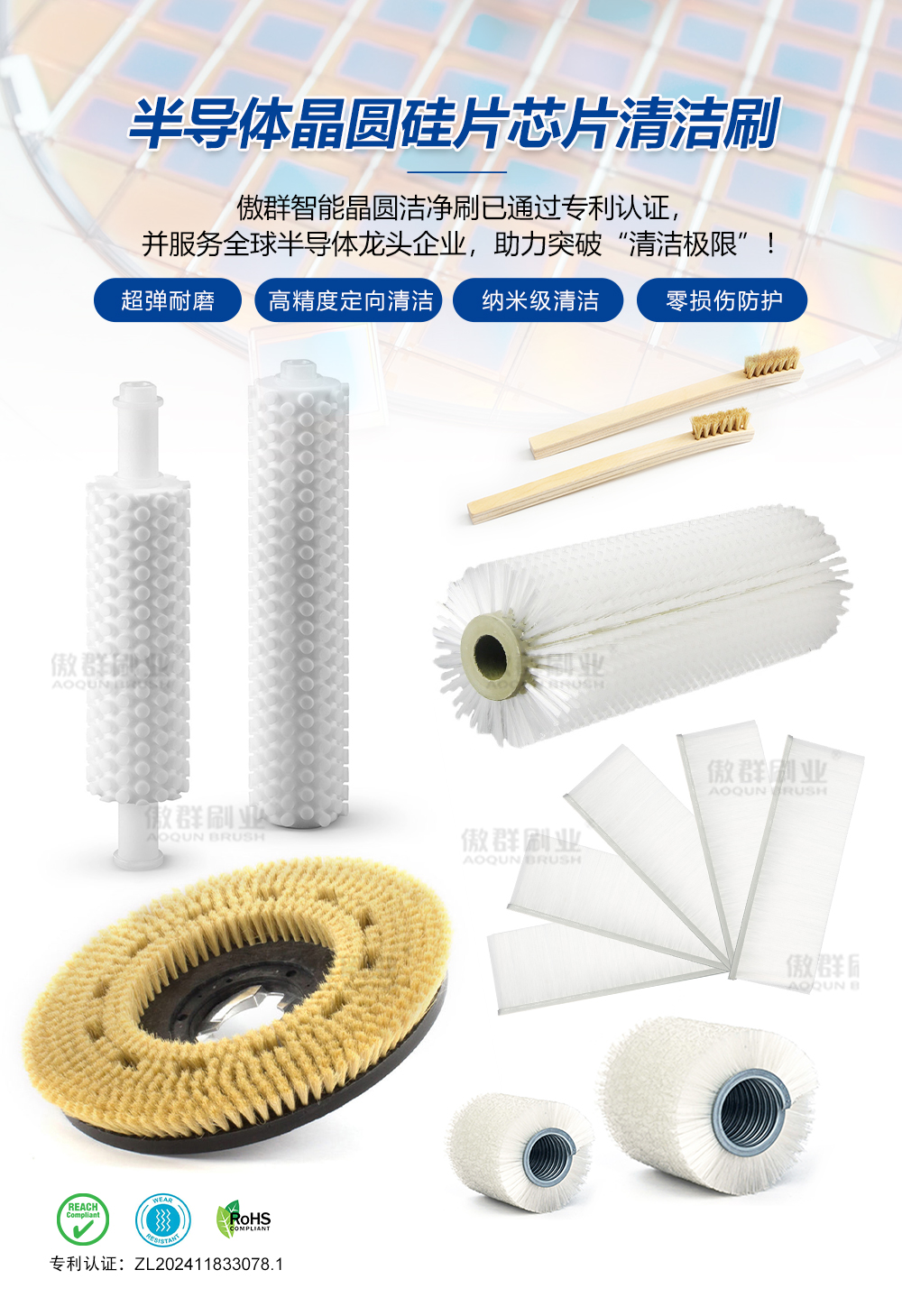
Wafer cleaning brushes for front-end, post-CMP and post-thinning cleaning, available as rollers, disc brushes and special shapes in PVA / PFA / nylon. Selection is based on equipment and operating conditions; sample schedules are confirmed after review.
- Wafer cleaning
- Common forms
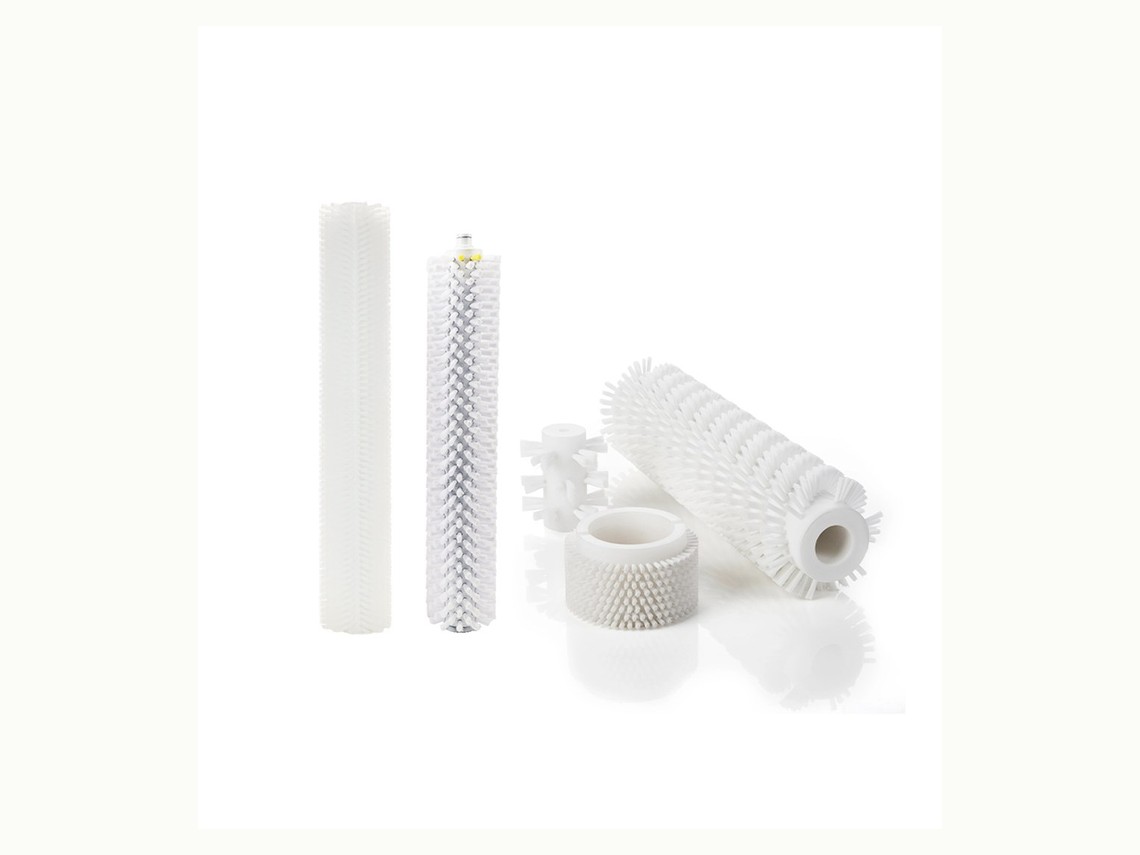
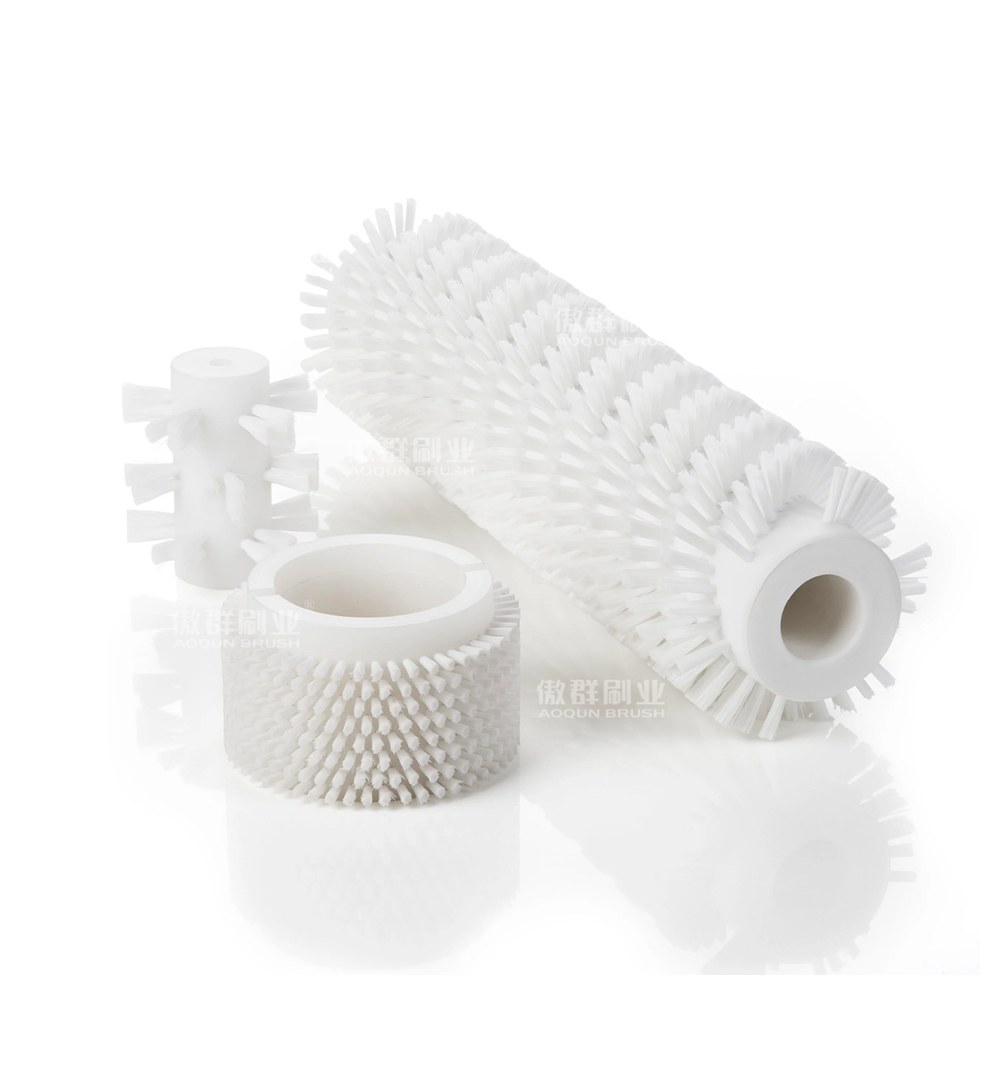
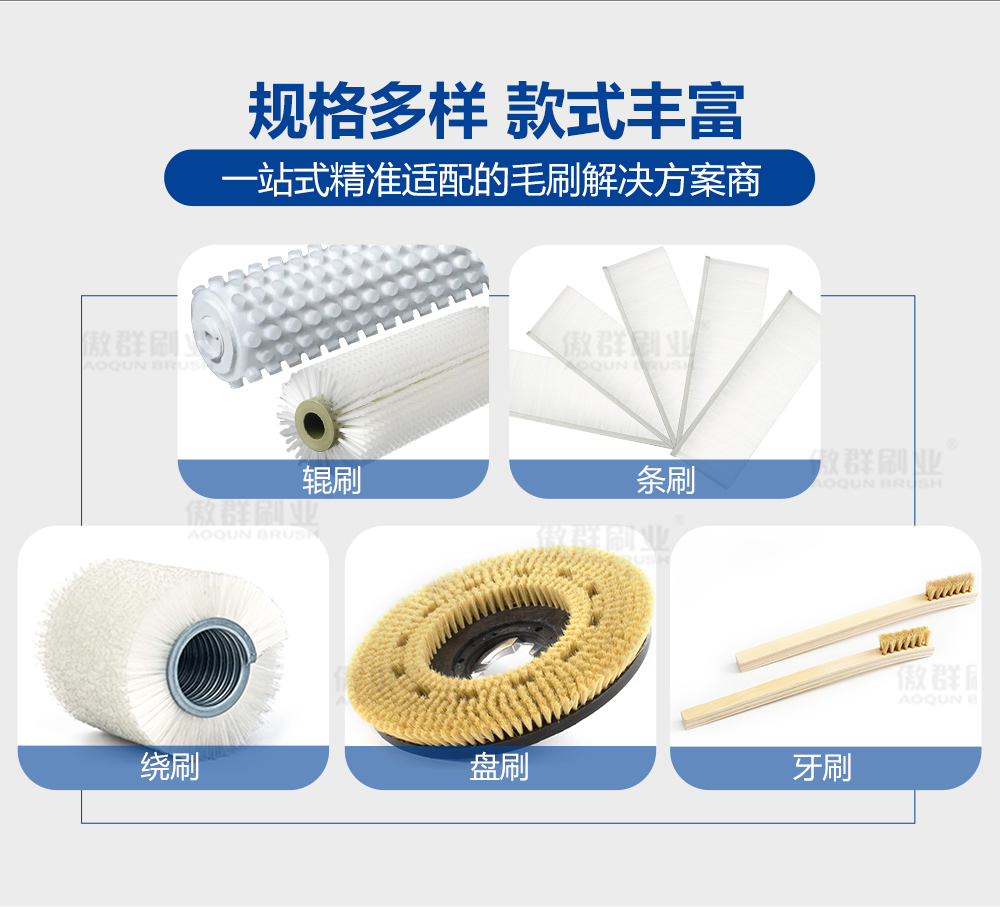
- Roller brushes / Disc brushes / Shaped and strip brushes
- Outer Diameter
- Rollers φ40 – φ160 mm; discs φ50 – φ300 mm
- Effective Length
- ≤ 1200 mm
- Pore Size
- 30 – 100 μm
- Hardness
- 3 – 15 Shore A
- End-face configuration
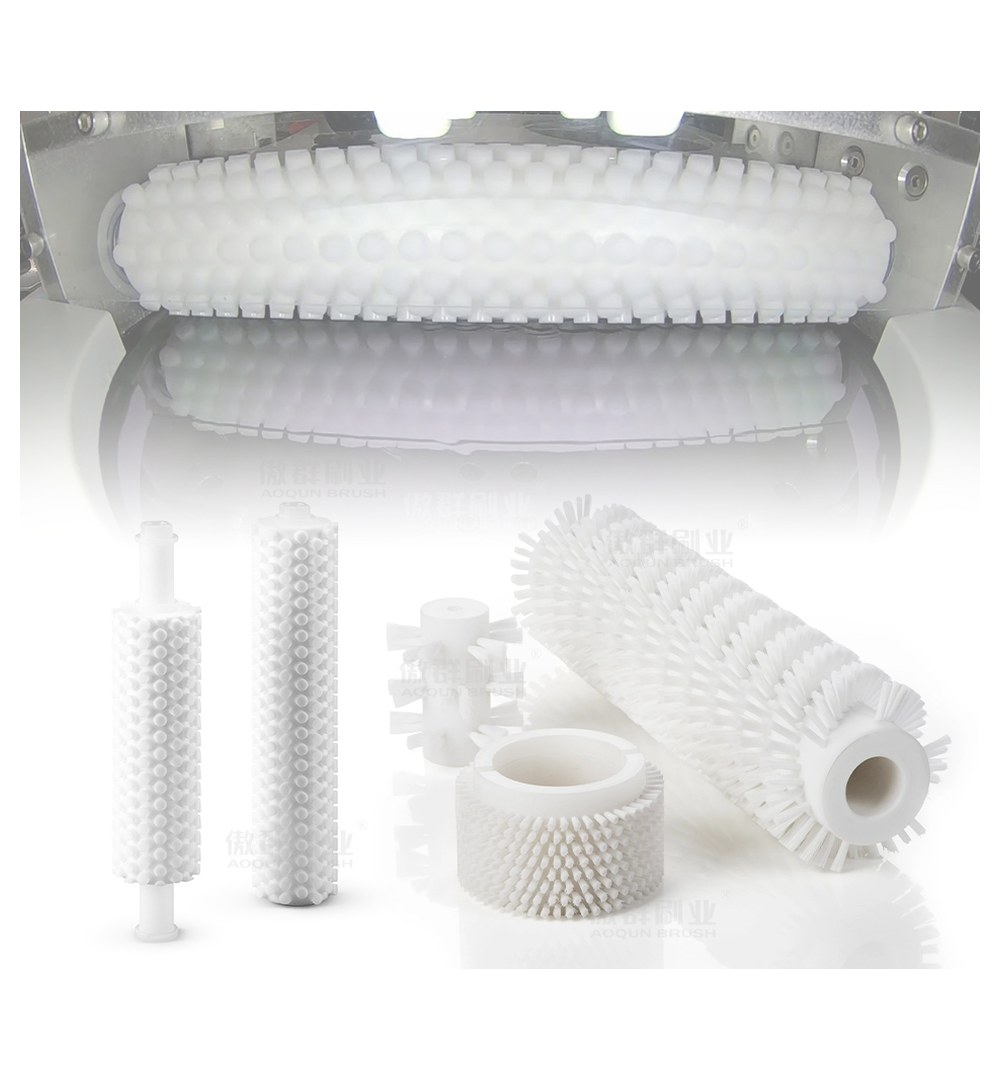
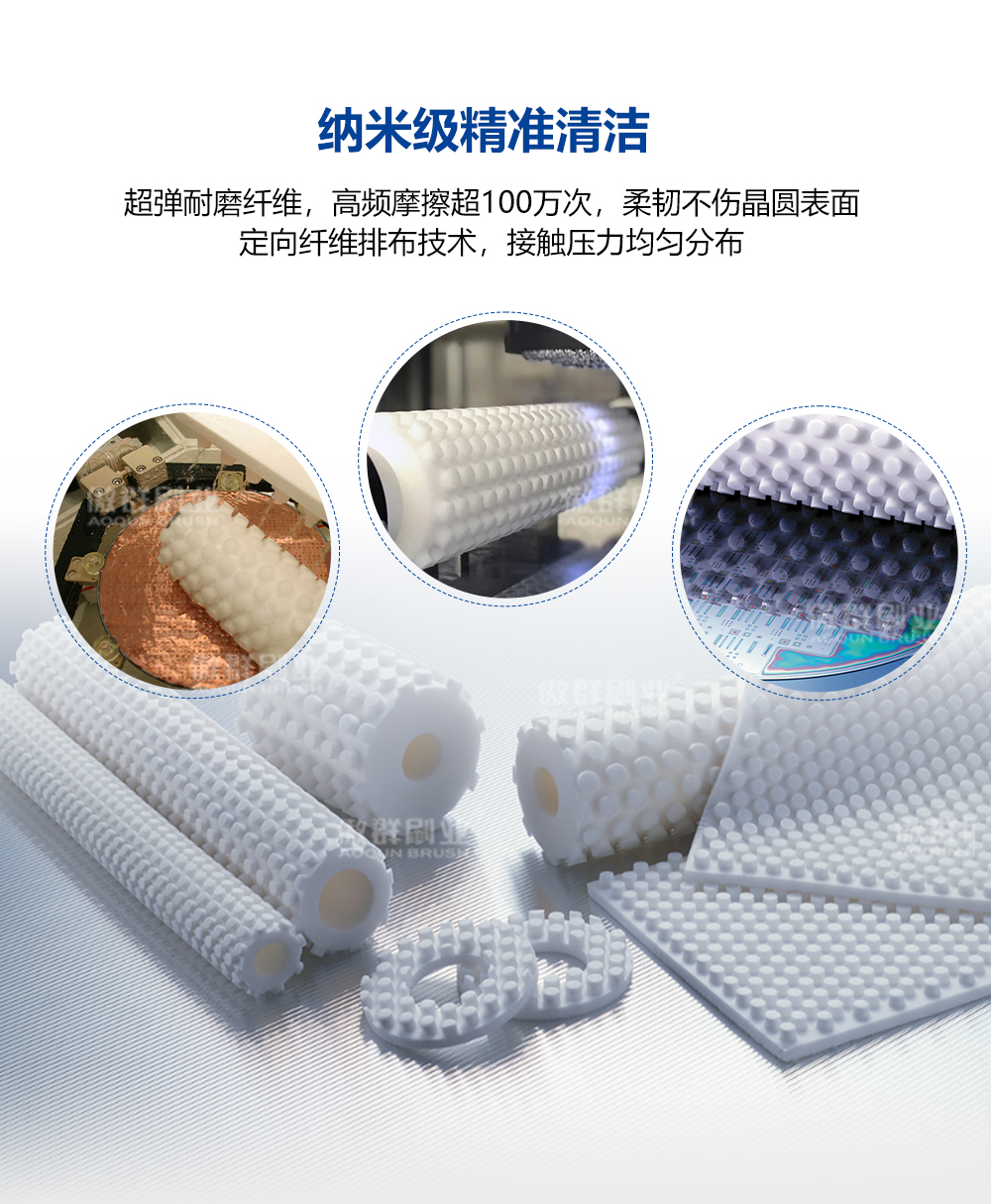
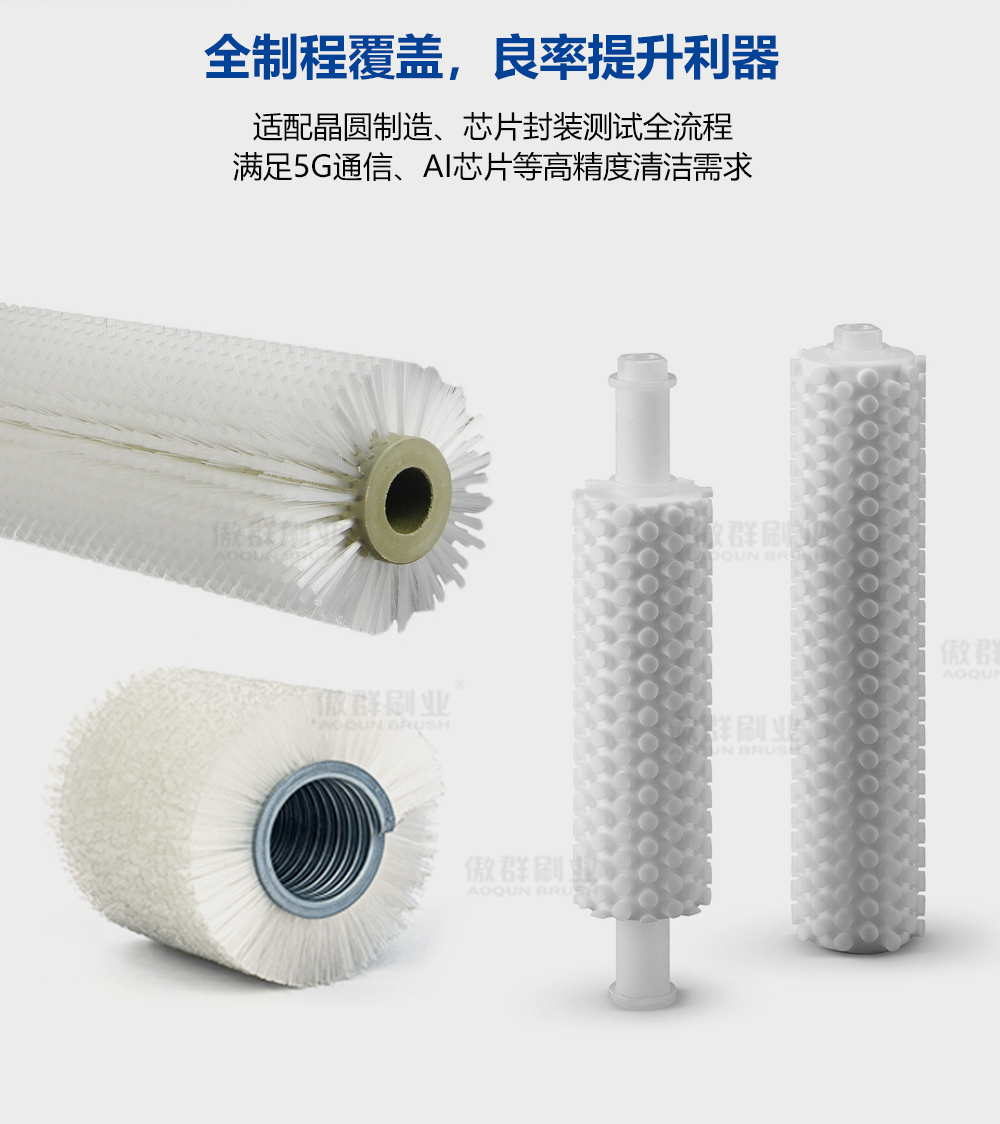
- Flat roller / Nodular / Slotted / Dimpled
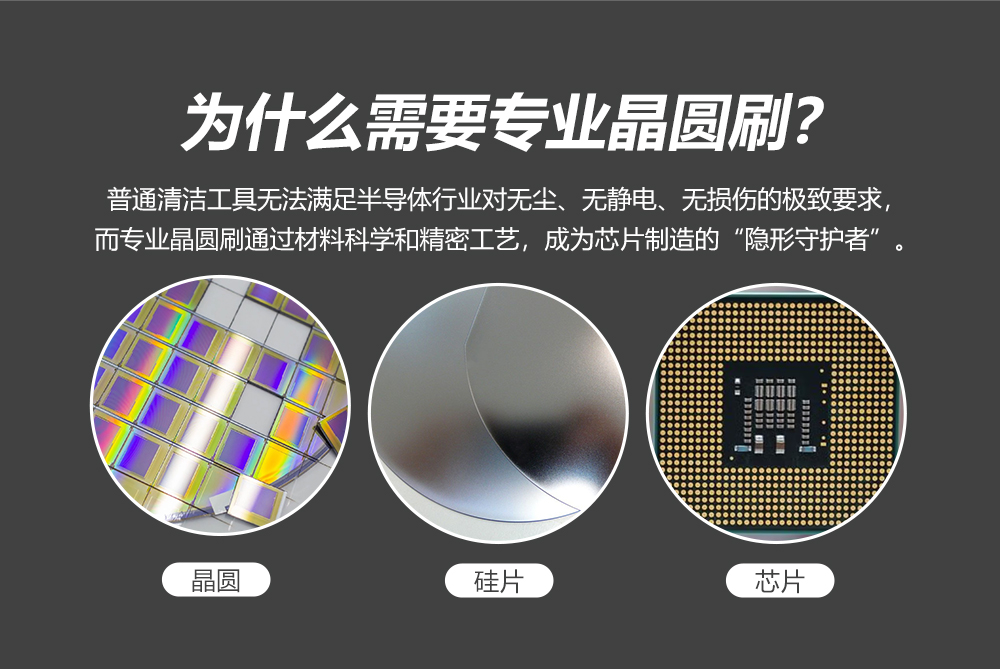
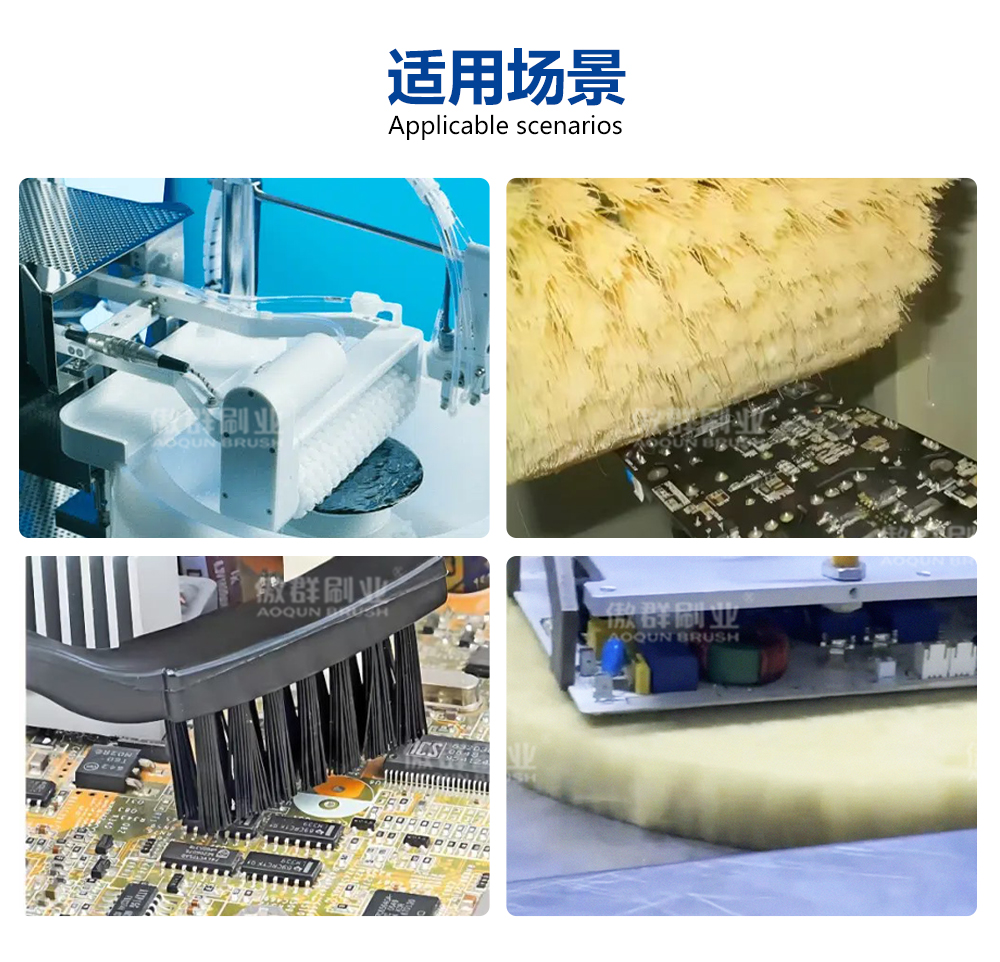
Wafer cleaning brushes are divided into three types according to the process:Front-end cycle cleaning Uses PVA porous brush rollers to remove particles and organic residues through capillary adsorption;Post-CMP cleaning Uses PVA brush rollers or disc brushes, focusing on removing slurry residues and polishing particles, with the most stringent requirements for extractables and end-face consistency;Post-thinning cleaning Uses PVA or PFA brushes to handle silicon powder and grinding-wheel debris, requiring good debris discharge and no filament shedding. Silicon wafer cleaning brushes, wafer brushes, and wafer cleaning disc brushes are all alternative names within this product family.

Why it matters Three essential questions
Choosing solely by product name
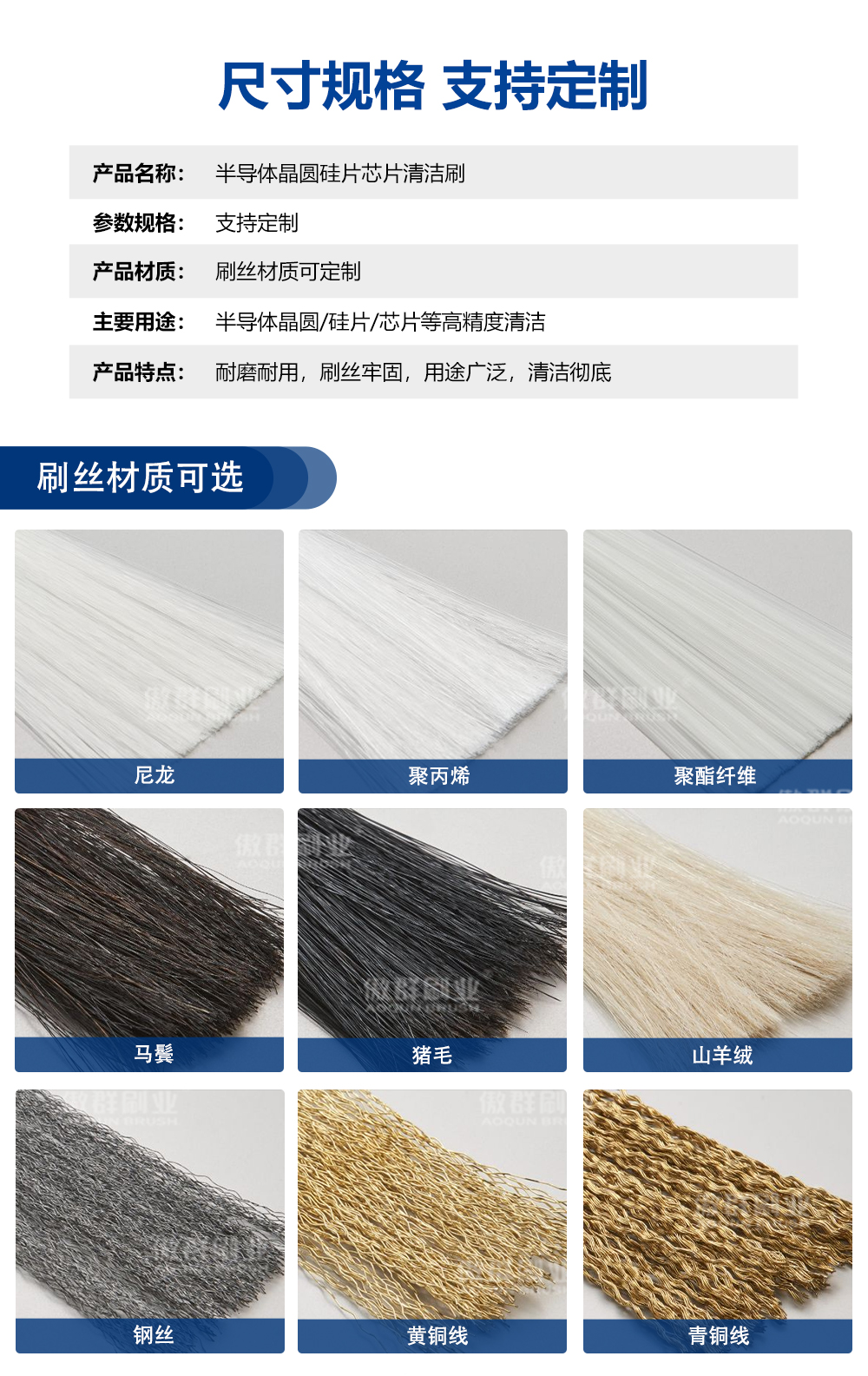
Use PVA capillary adsorption for particles, surfactant systems for organic residues, abrasive filaments for burrs and nylon for dust: identify the contaminant before choosing the brush form.
Overlooking the workpiece pressure limit
Thin sheets and masks require low hardness (3–8 Shore A); use higher hardness for cleaning rigid parts only. Selecting even slightly too hard a brush can cause scratches.
Not checking equipment interfaces in advance
Check shaft diameter and interference for rollers; adhesive backing, clips or threads for discs; and mounting grooves for shaped brushes. This often-overlooked step determines whether the brush will fit.
Specification Specification Parameter Ranges
| Parameter | Common ranges / options | Description |
|---|---|---|
| Common forms | Roller brushes / Disc brushes / Shaped and strip brushes | Choose by process and workpiece geometry |
| Outer Diameter | Rollers φ40 – φ160 mm; discs φ50 – φ300 mm | Consider contact wrap angle and installation space |
| Effective Length | ≤ 1200 mm | For long rollers, the mid-span deflection and dynamic balance grade must be evaluated |
| Pore Size | 30 – 100 μm | Finer specifications for the final-cleaning section while balancing resistance to clogging |
| Hardness | 3 – 15 Shore A | Low hardness for thin sheets and masks (3–8) |
| End-face configuration | Flat roller / Nodular / Slotted / Dimpled | Improve drainage and reduce adhering water films |
| Mounting method | Adhesive backing / Clips / Threads (disc brushes) | Confirm roller shaft diameter and interference |
| Dynamic balancing | Classified into G grades according to brush-position rotational speed | Specify operating speed for high-speed brush positions |
| Cleanroom packaging | One piece per clean bag + batch identification | Batch water absorption records available |
The table lists common ranges, not extreme values. Actual specifications shall be confirmed according to the brush-position drawing and operating conditions; where specific limits apply, mutually agreed technical documents shall prevail.
By process Three processes, three sets of specifications
| Process | Mainstream form | Material | Key indicators |
|---|---|---|---|
| Front-end cycle cleaning | Brush roller (flat / nodular) | Porous PVA | Pore size 30–100 μm, water absorption, end-face flatness |
| Post-CMP cleaning | Brush roller + disc brush | Low-extractables PVA formulation | Extractables, particle shedding, dynamic balance |
| Post-thinning wafer cleaning | Brush roller / disc / custom shape | PVA / PFA | Debris discharge, temperature resistance, no filament shedding |
| Photomask / photolithography plate | Custom-shaped brush, strip brush | PVA / ultrafine nylon filament | No scratching, no residual fibers |
Configurations Structural configuration
Brush roller form
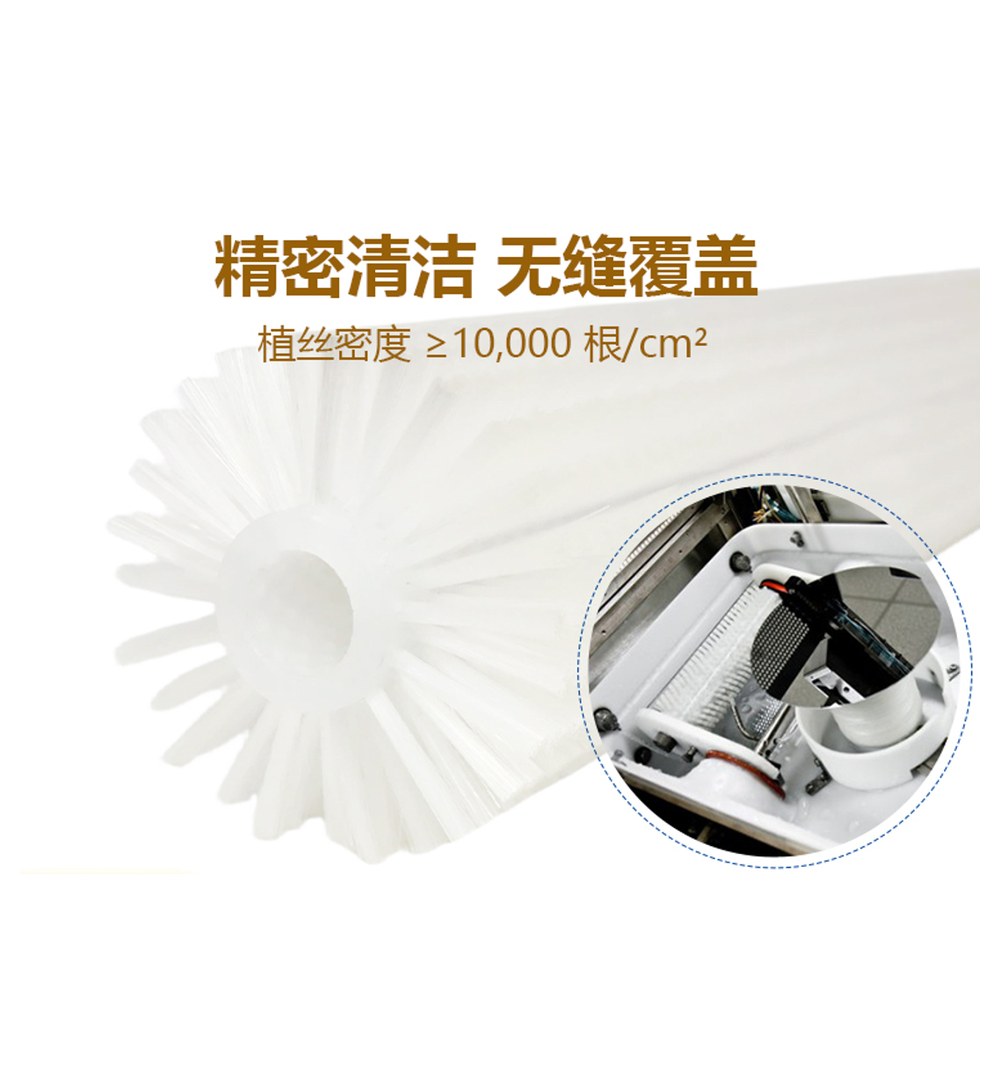
Provides uniform contact over the entire surface and is suitable for conveyor-type scrubbing. The end face is available in four configurations—flat, nodular, slotted, and dimpled—for different drainage requirements.
Disc form
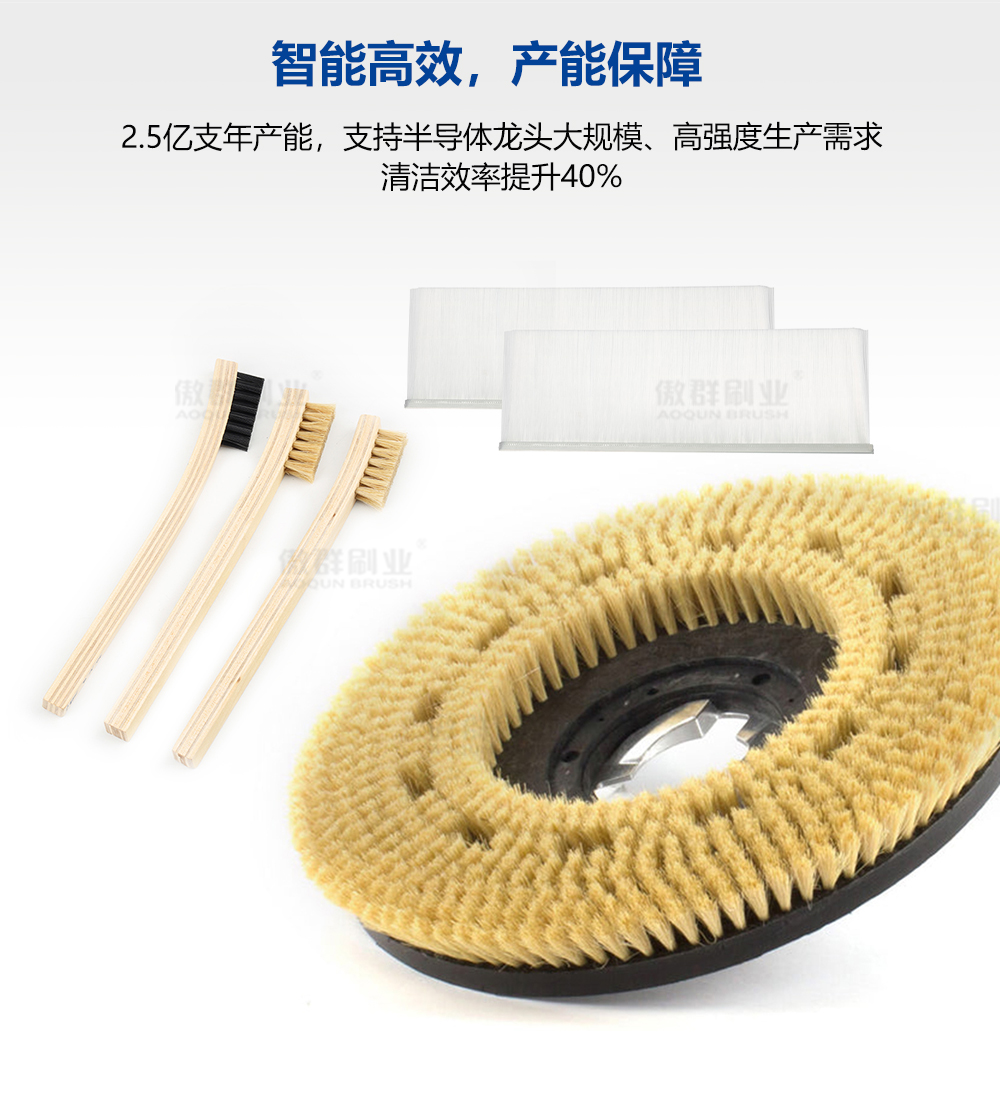
Suitable for single-wafer rotary scrubbing and targeted cleaning after CMP, φ50–φ300 mm, with three mounting options: adhesive-backed / snap-on / threaded.
Strip brush form
Use strip and shaped brushes on flat workpieces such as masks and photomasks to reach edges and corners, avoiding cleaning blind spots and residual fibers.
Custom shaped brushes
For non-flat workpieces such as masks, quartz parts and chambers, make brushes to match the contour and avoid uncleaned corners.
FAQ Product selection and communication
Are wafer cleaning brushes and PVA brush rollers the same thing?
Can the brush positions on imported equipment be replicated 1:1?
What specifications are suitable for a 300 mm wafer?
Are cleanroom packaging and extractables data available?
Customer requirements
Leave your contact details and requirements so we can get in touch.