
From laboratory to mass production: rigorous testing standards for semiconductor cleaning brushes
Durability, precision and environmental adaptability put cleaning brush tests far beyond the standards for ordinary industrial products. These requirements directly reflect the constraints of mass-production yield.
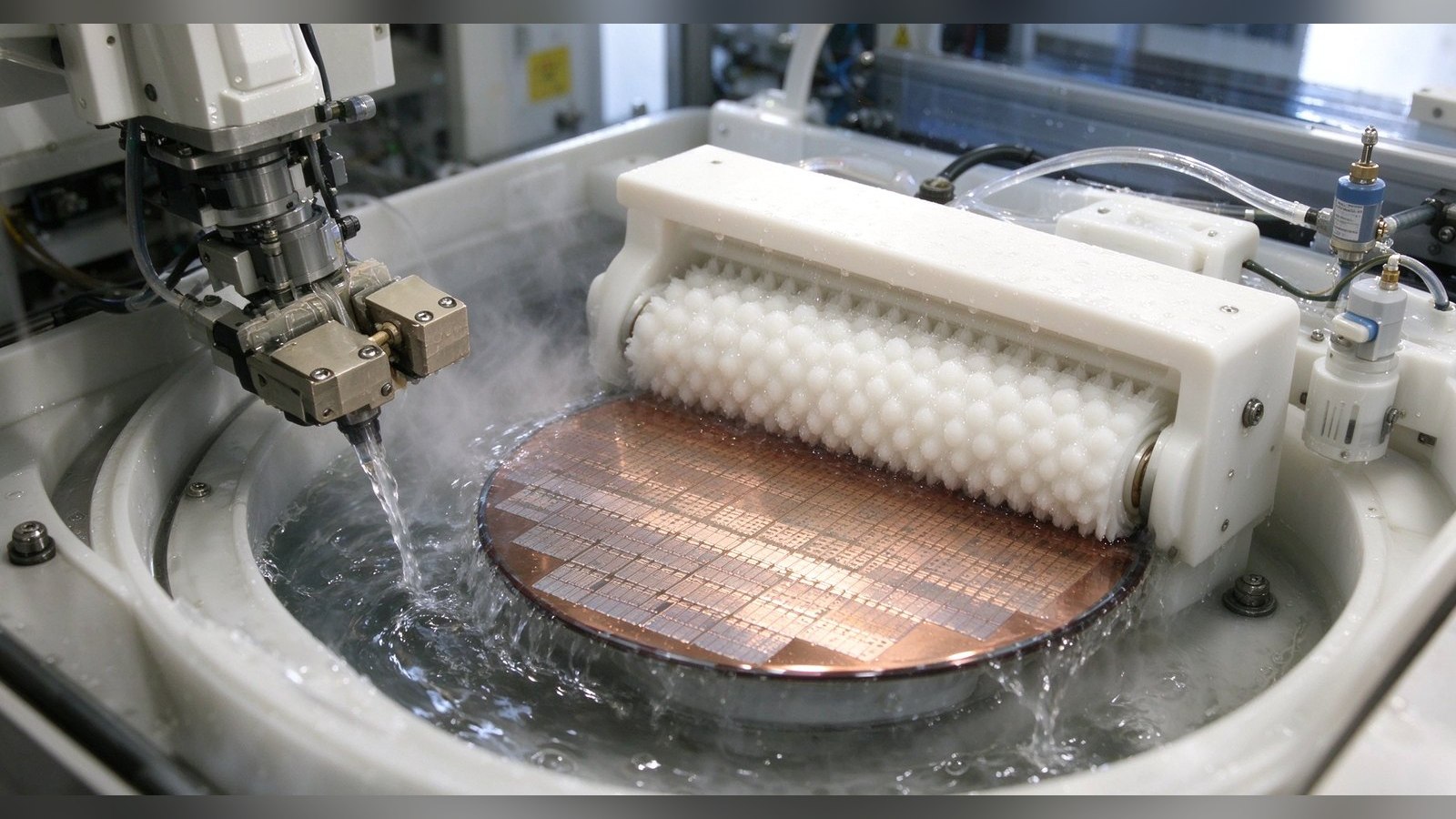
In semiconductor manufacturing, cleaning brush performance directly affects chip yield, requiring tests far stricter than those for ordinary industrial products.
Core testing covers three dimensions. Durability requires that after 1 million friction cycles simulating frequent use, performance degradation remains within 3%; polyimide composites extend service life to 3 times that of conventional nylon brushes. Precision cleaning requires 10nm process wafers to undergo 100 cleaning cycles with no surface damage visible under electron microscopy. Environmental adaptability includes tests at -40°C, at 85°C and under high humidity to ensure stable equipment operation in extreme conditions.

Balancing technical parameters is essential in mass production. Lowering bristle hardness to meet a zero-scratch standard, for example, may increase wear by 10%, yet improved yield can still generate substantial benefits. Less visible metrics, such as bubble-free output from ozonated water systems and nanoscale precision in material pore structures, also impose demanding brush requirements. These rigorous tests demonstrate technological capability and drive semiconductor equipment toward greater precision.
Customer requirements
Leave your contact details and requirements so we can get in touch.