
The problem of residue remaining after dust removal is electrostatic attraction, not brush filaments
After dust removal, fine particles still adhered to the board surface and were detected during AOI inspection, requiring manual rework wiping. The customer initially considered switching to harder brush filaments, but we first measured the board-surface electrostatic charge and brush-body grounding resistance—the problem was not brush-filament hardness.
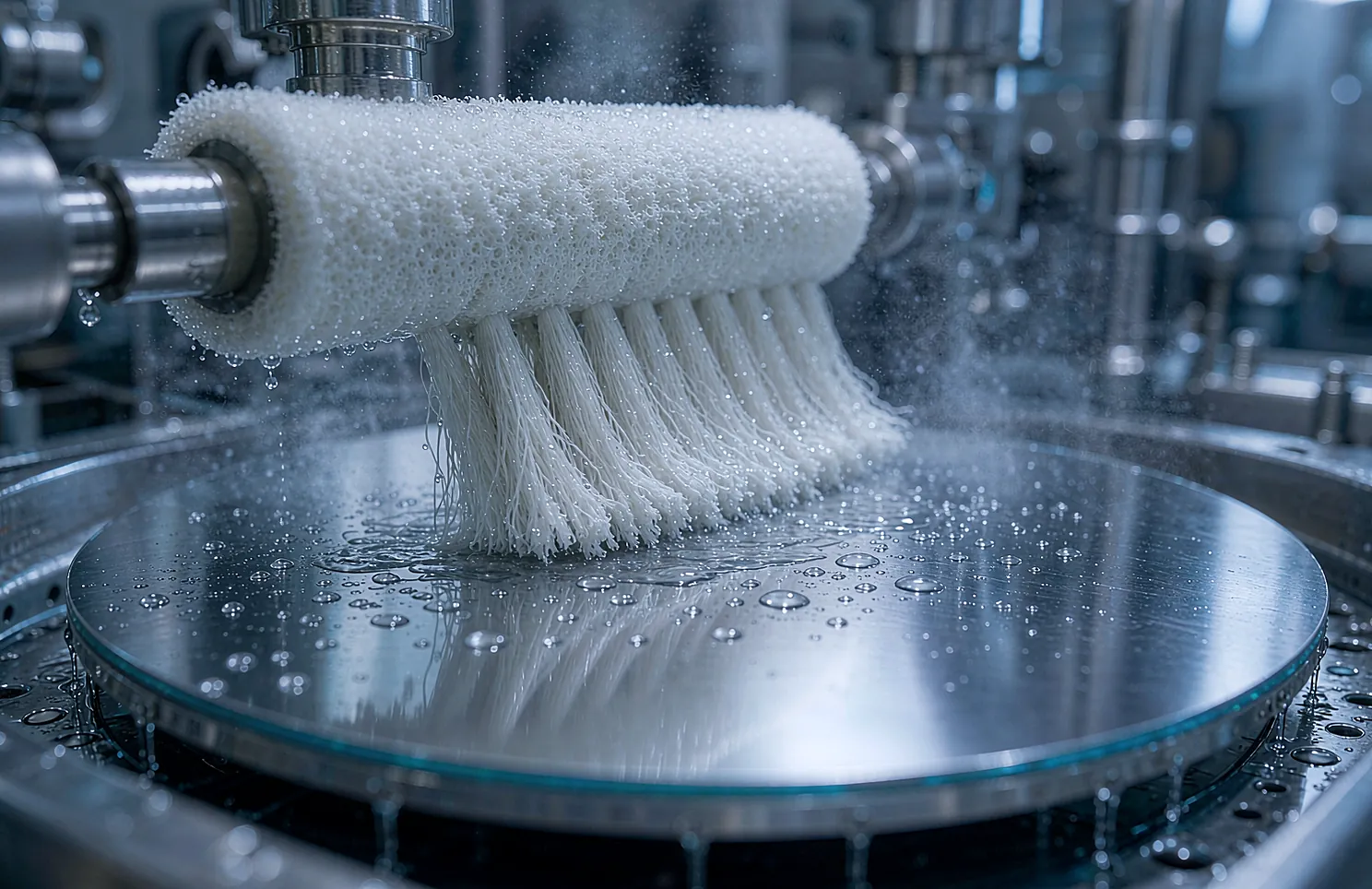
Problem Problem
The brush body has a surface resistance on the order of 10⁹ Ω, making it “insulating,” not “antistatic”; the charge generated by friction cannot dissipate;
There was no reliable grounding path between the brush body and the equipment; the grounding clip was attached to a painted surface, resulting in unstable contact resistance.
Solution Approach
- Instead, use a 10³–10⁶ Ω conductive-wire plate brush, with surface resistance spot-checked by batch;
- Used a handheld antistatic toothbrush for a second cleaning pass on board edges and gold fingers, with the brush handle grounded;
- Add a grounding copper strip to the brush-body mounting seat; the measured grounding resistance is < 1 Ω.
Result Results
| Metric | Before retrofit | After retrofit |
|---|---|---|
| Brush-body surface resistance | 10⁹ Ω | 10⁵–10⁶ Ω |
| Grounding resistance | Not measured | < 1 Ω |
| Board-surface residue defects | 1.8% | 0.4% |
Note Description
“Changing brush filaments saves a little money; dissipating the charge is what solves the problem.” — Customer Quality Supervisor
The case data follows the de-identified scope of the customer's acceptance records; customer names are withheld for confidentiality, and specific test conditions and acceptance criteria can be provided with factory-audit documentation.
Related Related products and materials
Customer requirements
Leave your contact details and requirements so we can get in touch.