Cleanroom Brush Manufacturing Factory: Controlling Contamination at Every Process Step
The cleanliness of semiconductor brushes is not achieved by a final cleaning process; instead, each process step introduces less contamination. This page describes our six process steps, inspection items, and the compliance documents you can obtain.

Cleanroom Brush manufacturing in a Class 100,000 cleanroom
The cleanliness of semiconductor brushes is not achieved through a single final cleaning process, but throughless contamination introduced at every process step. Tufting, cutting, and end-face machining can generate debris. If these steps are performed in a general workshop, no matter how thoroughly the products are cleaned at a later stage, debris trapped in the pores is difficult to remove completely.
Therefore, our production line performs forming, end-face machining, cleanroom cleaning, and packaging in a controlled environment, minimizing contact with the floor and unprotected exposure in intermediate stages. This is not a marketing point, but a prerequisite for the usability of PVA-type products.
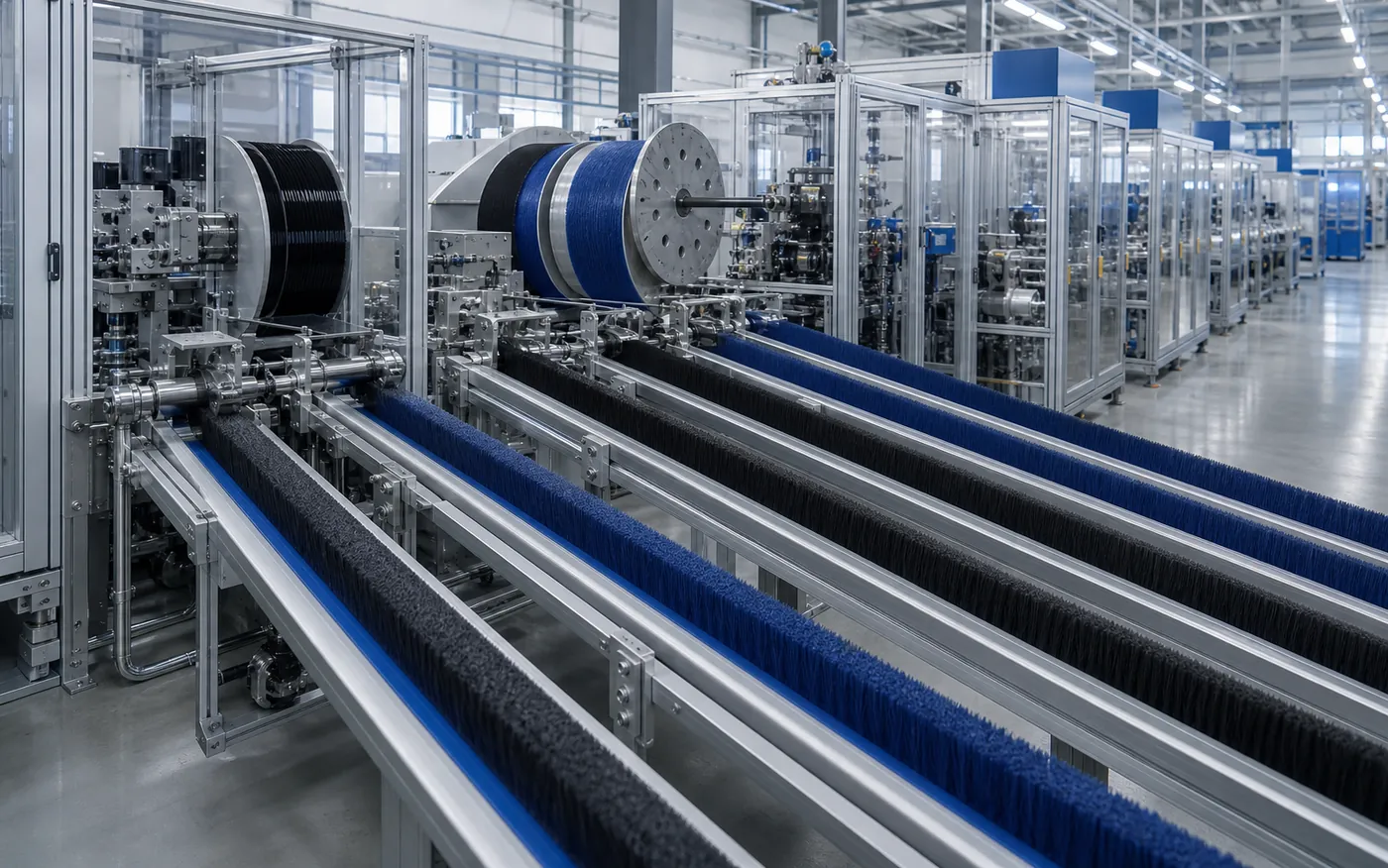
Process The 6 stages from raw materials to shipment
Incoming Inspection
Filament materials, sponge substrates, and base profiles are inspected by batch. Filament diameter, resilience, moisture content, and impurities are the key inspection items.
Formulation and Foaming
For PVA types, pore size and open porosity are controlled according to the formulation; for filament types, the target diameter and material are selected, with different applications managed in separate batches.
Forming / Tufting
Punching and tufting, winding, and embedding are selected according to the structure. Tuft density directly affects service life and uniformity.
End-Face Machining
Cutting and end grinding. This step determines end-face flatness and the presence of flash—the source of scratch risk.
Cleanroom Cleaning
The cleaning method is selected according to the material to remove machining debris and surface residues, followed by drying.
Packaging and Retained Samples
Individual brushes or components are placed in clean bags with the batch number marked; samples from the same batch are retained for subsequent traceability and batch comparison.
QC Inspection Items and Determination Methods
| Item | Content | Description |
|---|---|---|
| Key Dimensions | Outer Diameter / Inner Diameter / Length / End-Face Flatness | Inspected according to the drawing; scrapped if out of tolerance |
| Tuft Retention Strength | Tensile Spot Checks | Prevents filament shedding during use |
| Appearance | Flash, hard spots, impurities, and discoloration | End faces receive priority inspection because they are high-risk areas for scratching |
| Hardness | Batch spot checks (Shore A) | Related to formulation consistency |
| Water absorption | Saturated Water Absorption Recheck (PVA Types) | An early indicator of cleaning performance |
| Dynamic balancing | Categorized by rotational speed (high-speed components) | Residual unbalance recorded |
| Cleanliness | Filament-shedding test / clean packaging confirmation | Key focus for maintenance tools |
| Batch Retained Samples | Retained according to the order | Facilitates traceability and batch comparison |
Compliance Compliance Documents and Clean Packaging
- RoHS / MSDS: Provided by batch and executed according to the customer-specified standard.
- Cleanroom packaging: Individual brushes/components are placed in clean bags marked with the batch number, model, and production date; long-handled products are packaged separately to prevent compression and deformation.
- Batch Traceability: The raw material batch → production batch → shipment batch correspond across all three stages, enabling identification of the specific step when an issue arises.
- System Certifications: ISO 9001, ISO 14001, National Specialized and Sophisticated “Little Giant” enterprise, and National High-Tech Enterprise.
If you need to incorporate our inspection records into your incoming inspection system, please raise this during the sampling stage so that we can align the determination methods and record formats.
Certification Qualifications and Management Systems
- ISO 9001Quality Management System
- ISO 14001Environmental Management System
- Specialized and Sophisticated SMEKey “Little Giant”
- High-Tech EnterpriseNationally Recognized
- RoHS / MSDSProvided by Batch
- 12 Management System CertificationsCertificates on the About page
FAQ Common Questions About the Factory
What cleanroom classification is maintained?
Can you conduct a factory audit?
How are the minimum order quantity and lead time calculated?
Can you perform a full inspection according to our drawings?
Customer requirements
Leave your contact details and requirements so we can get in touch.